How China Is Aiding Dangote’s Fuel Distribution Expansion Programme
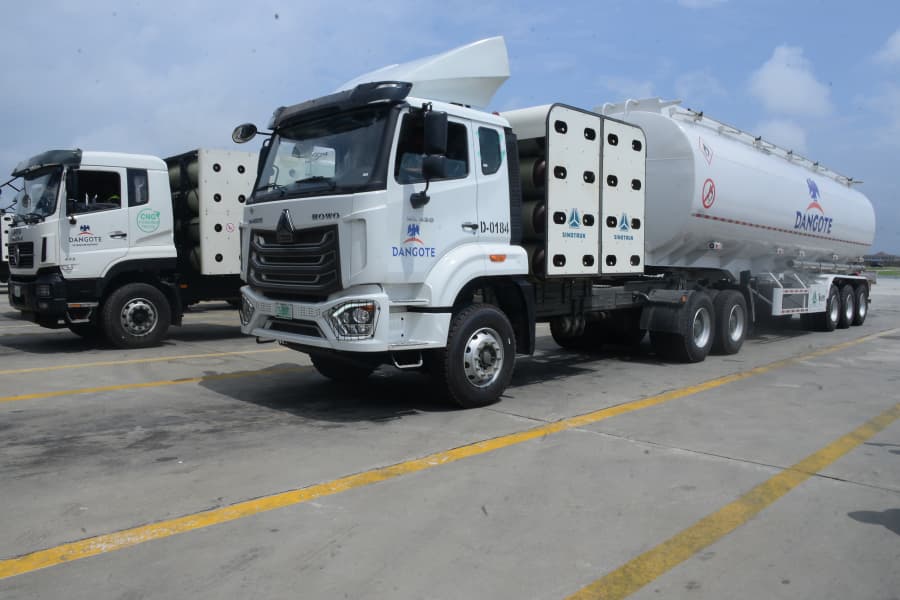
When Africa’s frontline billionaire Aliko Dangote decided to bypass Nigeria’s traditional petroleum marketing and distribution networks, the move was born out of operational necessity.
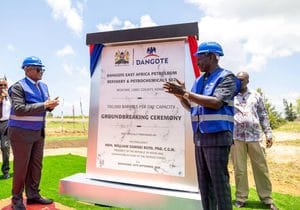
The industrialist behind the landmark Dangote Petroleum Refinery—which scaled its processing capacity to 700,000 barrels per day—faced an immediate bottleneck: refined products were stacking up in storage tanks rather than being evacuated.
Dangote publicly addressed the staggering holding costs of having multi-billion Naira inventory sit idle due to sluggish off-take by local marketers.
The root of the problem lay in a distribution chain heavily controlled by legacy importers and firmly entrenched transportation unions. Sensing an attempt to hamstring the refinery’s commercial viability, Dangote moved swiftly to break the gridlock.
China to the Rescue
With the financial viability of Africa’s largest refinery hanging in the balance, Dangote turned to Chinese automotive manufacturing. Within months, the first shipments of a massive vehicle order were bound for Nigeria.
Rather than letting local logistics cartels dictate terms, Dangote’s strategy was simple: build an independent fleet to take the fuel directly to the markets.
This supply chain mastery paved the way for the refinery’s free fuel delivery programme.
Maximising his characteristic business acumen, Dangote bypassed diesel-powered haulage entirely. With diesel prices hovering between ₦1,700 and ₦1,800 per litre, relying on traditional trucks would have compromised the initiative’s cost efficiencies. Instead, the industrialist opted for Compressed Natural Gas (CNG)-powered trucks sourced from China, slashing logistical overhead by a significant percentage.
The company confirmed that the rollout utilizes 4,000 brand-new Chinese CNG-powered tankers as part of a massive ₦720 billion logistics investment.
Executive Director at the Group, Fatima Aliko-Dangote, explained that the strategic reduction in distribution costs is particularly significant for marketers supplying areas far away from the facility, as the transportation of petroleum products over long distances attracts heavy cumulative expenses.
Expanding the Footprint
By eliminating middlemen and absorbing heavy long-distance transport costs, the initiative has successfully relieved severe financial bottlenecks for independent local oil retailers.
Consequently, the Dangote Petroleum Refinery is expanding its free fuel delivery logistics to four additional states.
Since its rollout, the disruption has scaled to cover 10 strategic hubs across Nigeria. The newly included distribution zones feature Imo, Anambra, Nasarawa, and Kano. Prior to this expansion, the logistics network actively serviced Abuja, Lagos, Rivers, Ogun, Delta, and Kaduna.
Reacting to the latest cross-country expansion, the National Publicity Secretary of the Independent Petroleum Marketers Association of Nigeria (IPMAN), Chief Chinedu Ukadike, lauded the operational scaling: “We want to commend the management of Dangote Refinery for making this possible, and we are also appealing to them to extend it further to other states, especially those in the northern areas, so that petroleum products will be bought uniformly. This will reduce the hardship Nigeria is facing. This is the beauty of deregulation and competition.”
Relieving the Independent Marketers’ Cash Crunch
For some time now, members of IPMAN faced crippling logistical and financial delays. Marketers were routinely forced to tie up billions of Naira upfront, only to wait weeks for orders to be loaded, turned around, and hauled from Lagos to distant northern and eastern territories.
By absorbing 100% of these long-distance transport fees and moving products directly to regional depot zones using its Chinese-built CNG fleet, the Dangote Refinery has dramatically shortened capital cycles.
IPMAN National President, Alhaji Abubakar Shettima-Garima, highly endorsed the structural relief: “Trucks have begun moving and discharging products. My members are very pleased. We are ready to reduce prices as long as we can maintain reasonable margins and remain profitable. Our goal is to make fuel more affordable for consumers.”
With the refinery bypassing middlemen and dropping its gantry prices, pump rates at local independent stations are already reacting. Prices are projected to see reductions of up to ₦50 per litre in certain regions as the CNG fleet’s wider coverage scales across Nigeria.