Discounted NNPC Fuel Not a Return to Subsidy-Presidency
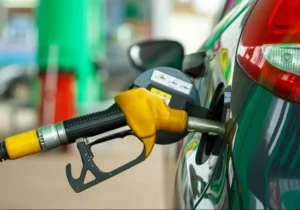
ABUJA, NIGERIA — The Nigerian National Petroleum Company (NNPC) Ltd Retail has agreed to completely waive its profit margin on petrol, selling the product at cost for the next 30 days.
The temporary relief measure aims to shield Nigerian households from the ongoing shock and volatility of global crude oil prices.
Backed by President Bola Ahmed Tinubu, the discount was announced on Thursday by the Minister of Finance and Coordinating Minister of the Economy, Taiwo Oyedele, alongside a comprehensive suite of economic interventions designed to stabilize pump prices and ease transport costs.
Under the new 30-day arrangement, NNPC Retail—which already maintains the lowest fuel prices in the country—will pass zero-profit pricing directly to consumers, with a particular focus on supporting commercial vehicles. Minister Oyedele urged private independent marketers to follow the NNPC’s example, noting that the current spike in international crude and petrol prices is expected to be short-lived.
Oyedele strongly emphasized that the NNPC’s discount gesture does not signal a return to the petrol subsidy regime, which officially ended on May 29, 2023. Instead, the government is introducing market-driven smoothing mechanisms.
Chief among these mechanisms is a newly negotiated ceiling of N1,350 per litre on the ex-gantry or landing cost of petrol. Under this framework, if landing costs exceed N1,350, refiners and importers will absorb the short-term deficit and recover their losses later when global crude prices drop or the exchange rate improves.
“This is neither a subsidy nor a price control: it is designed to smooth prices over time rather than suppressing them,” Oyedele explained. “The reasoning is simple. 1,400 naira a litre today and 1,400 tomorrow is better than 1,500 today and 1,300 tomorrow, because volatility itself adds to uncertainty and cost.”
He added that the ceiling will undergo transparent monthly reviews.
To further insulate local prices, the Federal Government announced the forward sales of crude oil to domestic refineries. As national oil production increases and previously committed crude supplies are freed up, this strategy is expected to protect domestic pump prices from global market fluctuations.
Beyond direct fuel pricing, the government is deploying a multi-pronged strategy to tackle inflation and reduce the cost of living. These include tax and levy reforms, a strategy in which the federal government is partnering with state governments and security agencies to crack down on illegal road taxes and extortionate logistics levies that artificially inflate food and transit costs.
The Federal Government also announced an accelerated CNG rollout across all states, arguing that since CNG operates at 60% to 70% cheaper than petrol, the government expects transport operators to pass these substantial savings directly to commuters through lower fares.
The government is considering an excess profit tax targeting energy operators who take undue advantage of consumers. This means that revenue generated from this tax will be strictly funneled into transport vouchers and support systems for urban minimum-wage earners, guaranteeing enhanced tax reliefs for low-income earners.
To prevent artificial scarcity and deter market manipulation, the government says it is investing in a strategic refined product reserve. This involves the release of fuel into the market under strict, transparent rules during global supply disruptions or hoarding crises to anchor long-term energy security.
To assist the most vulnerable, the presidency stated that social safety funding is being scaled up for direct cash transfers to vulnerable households and subsidized credit lines for small businesses. “Additionally, urban traffic management is being optimized to curb fuel wastage, and NIPOST’s newly launched address codes will be utilized to streamline logistics and lower distribution costs,” the statement added.
Reflecting on the adjustments, Special Adviser to the President on Information and Strategy, Bayo Onanuga, reemphasized that reversing the fuel subsidy removal is completely off the table, warning that returning to the old system would trigger a fiscal crisis, smuggling, and currency collapse.
“Government is not out to reverse a necessary reform designed to set our country on the path towards sustained prosperity,” Onanuga stated. “It is to ensure its gains reach more Nigerians, faster and in more tangible ways.”
The Presidency confirmed that it is currently finalizing a broader fiscal package targeted at sustainably returning Nigeria’s inflation rate back to single digits.

A business journalist focused on uncovering the stories shaping companies, markets, industries, and the wider economy. Skilled at turning complex financial and corporate developments into clear, engaging stories that inform and connect with readers. Committed to accurate, insightful reporting that goes beyond the headlines.