APC Campaign Council: Tinubu Will Account for Electricity Pledge in Second Term Bid
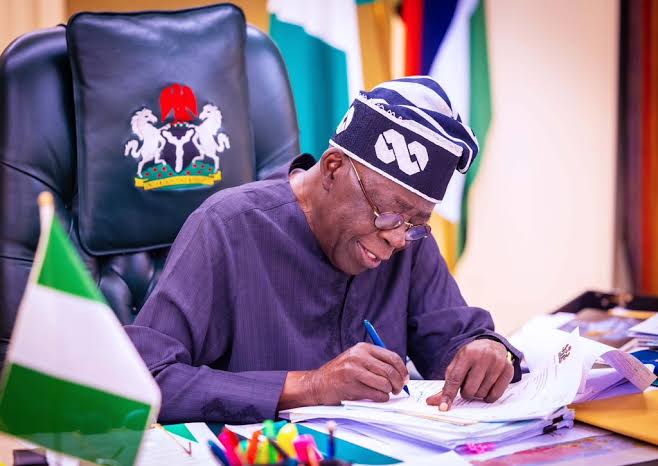
The All Progressives Congress (APC) Presidential Campaign Council has urged the public to evaluate President Bola Ahmed Tinubu’s campaign promises on electricity within their complete context as the administration approaches the end of its first term.
In a statement issued on November 1, 2026, Campaign Council Spokesperson Dele Alake addressed recent public commentary regarding the President’s 2023 pledge to eliminate estimated billing and stabilize the national grid.
Alake maintained that a fair assessment must weigh the administration’s legislative and infrastructural record against the full scope of the original statement.
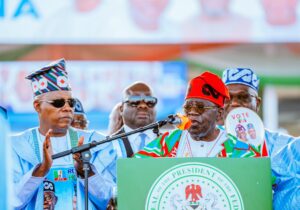
During a pre-election address to the Organised Private Sector (OPS) in Lagos, then-candidate Tinubu pledged to confront the institutional challenges that have impacted Nigeria’s power sector for more than five decades.
“Whichever way, by all means necessary, you will have electricity, and you will not pay for estimated bills anymore,” Tinubu stated during the 2023 campaign. “A promise made will be a promise kept. If I don’t keep the promise and I come for a second term, don’t vote for me, unless I give you adequate reasons why I couldn’t deliver.”
The campaign council noted that recent public critiques have omitted the final qualification of the pledge, which establishes accountability to the electorate.
Alake stated that the President has not deviated from his commitments and will present a comprehensive scorecard to Nigerians ahead of his second-term mandate request.
Structural and Legislative Reforms
The council outlined several structural interventions implemented since 2023 to improve market liquidity and decentralize operations.
Enacted within the first two weeks of the administration, the Electricity Act 2023 moved electricity from the Exclusive List to the Concurrent List, empowering subnational governments to regulate and drive private capital into local power markets.
States currently utilizing this framework include Lagos, Enugu, Abia, Ekiti, Oyo, Kaduna, and Niger.
To mitigate market risks inherited from the 2015–2025 period, the government introduced a ₦4 trillion bond programme to settle verified debts owed to generation companies (Gencos) and gas suppliers (Gascos). The first two tranches raised ₦1.2 trillion, which the council credits with enabling recent private upgrades, such as those announced by Geregu Power Plc.
Furthermore, Alake argued that the administration established service-based tariff bands to introduce cost-reflective pricing for specific consumer segments.
The policy aims to improve the cash flow of distribution companies (Discos) while reducing federal financial burdens related to tariff subsidies.
Metering and Grid Infrastructure
To address the estimated billing deficit, the campaign council says it initiated the Presidential Metering Initiative to close an inherited gap of over 7 million meters. According to the council, more than 1.5 million customers have been metered under the programme over the last three years.
The statement highlighted infrastructural projects currently underway include solar deployments by the Rural Electrification Agency to hospitals and universities, the modernization of the 60-year-old Osogbo Grid Control Centre, and plans for an East-West supergrid.
The council further noted that the administration reviewed and accelerated the Presidential Power Initiative (PPI) originally commenced under former President Muhammadu Buhari. Following an Acceleration Agreement signed with German partners in December 2023, the Federal Executive Council (FEC) approved upgrades for an initial batch of five Transmission Company of Nigeria (TCN) substations.
In June 2026, the FEC approved contracts for a second batch of projects involving eight new substations and four upgrades. The council stated that the long-lead procurement projects are progressing toward completion before the end of the administration’s current term.

A politics and current affairs reporter covering breaking political news, government affairs, elections, policy, and stories that matter.