Wokeism, the Nigerian Public and Media, and the Dangerous Myth That Politicians Are Society’s Moral Compass
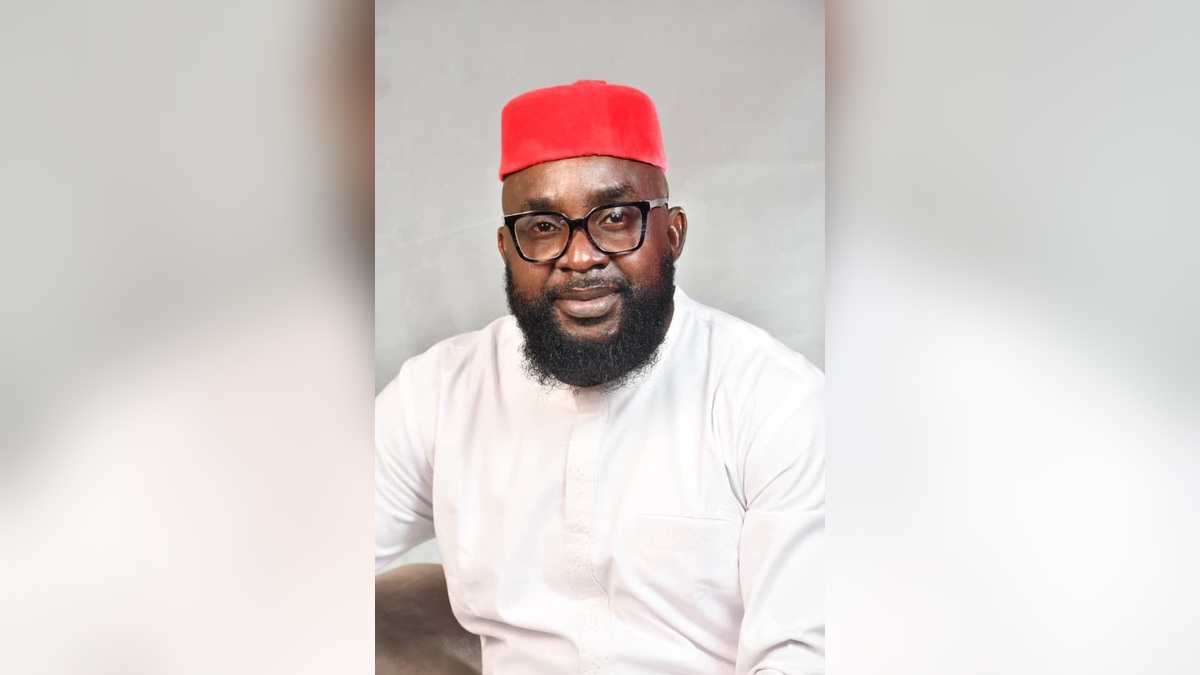
by Capt. Bishop C. Johnson, US Army (rtd)
There is a curious transformation taking place in Nigeria’s political discourse. Increasingly, politicians are not judged principally by the legality of their actions, the competence with which they exercise public authority, or the results they deliver. Instead, they are increasingly subjected to a shifting test of moral acceptability, influenced heavily by imported Western cultural and ideological fashions.
Say the approved progressive thing and you are celebrated as enlightened. Say something crude, culturally conservative, or politically incorrect, and sections of the public and media can quickly turn you into a threat to society’s moral fabric.
This is a dangerous confusion.
A constitutional democracy does not exist to produce morally immaculate politicians. It exists to constrain political power.
Politicians are not priests, Imans, philosophers, or society’s moral custodians. They are holders of public authority whose actions must be measured against the Constitution, the law, institutional standards, and, ultimately, the judgment of the electorate.
When a politician steals public money, abuses office, intimidates citizens, manipulates institutions, or violates the law, he or she should be investigated, exposed, and, where the evidence warrants it, prosecuted.
But saying something offensive or crazy is not necessarily a crime. Saying something crude is not necessarily corruption. Expressing an unpopular opinion is not necessarily an abuse of office. Rejecting the latest progressive slogan is not, by itself, evidence of moral depravity.
A politician can say something crazy, foolish, insensitive, or offensive without having committed an offence.
That distinction is increasingly being lost.
The phenomenon popularly described as “wokeism” has contributed to this development. Some of its underlying concerns—discrimination, exclusion, injustice, and the abuse of vulnerable people—are legitimate. But legitimate concern becomes problematic when moral consciousness turns into moral absolutism; when disagreement is treated as evidence of prejudice; and when social disapproval is confused with illegality.
Nigeria should be particularly cautious.
Nigeria is not Britain, America, or Canada. It has its own history, cultures, religions, ethnic identities, social structures, and political experiences. Concepts developed within particular Western historical circumstances do not automatically translate into the Nigerian environment without modification.
Yet our public discourse increasingly attempts to interpret Nigerian realities through imported ideological binaries. Religion, culture, ethnicity, and political disagreement are sometimes squeezed into categories that do not adequately describe our society.
The result is often more heat than light.
This is where the Nigerian media has a special responsibility. Journalism should expose power, investigate wrongdoing, provide context, and enable citizens to make informed judgments. It should certainly report controversial statements by politicians. But there is a difference between reporting controversy and making controversy the centre of political journalism.
A politician’s outrageous statement may dominate television and social media for days while a multibillion-naira contract receives barely a paragraph or a few seconds of television or radio coverage.
A quarrel over language can generate enormous outrage, while questions about security expenditure, public procurement, electricity, infrastructure, education, and corruption receive comparatively little attention.
That is a dangerous inversion of priorities.
The most controversial story is not necessarily the most consequential story.
Power is exercised through budgets, contracts, appointments, institutions, and policies, not merely through television interviews and social media posts. If journalism spends disproportionate energy policing the language of politicians while neglecting the structures through which they exercise power, it risks becoming a theatre of outrage rather than an instrument of accountability.
There is another consequence: hypocrisy becomes profitable.
Politicians quickly learn the language of whatever moral constituency they need. They master the fashionable vocabulary, make the appropriate declarations, and perform virtue when politically useful. Yet none of this guarantees competence, integrity, or good governance.
A politician can speak beautifully about equality and still preside over corruption. He can preach tolerance while weaponising state institutions against opponents. He can perform inclusion while distributing patronage through exclusion.
Conversely, another politician may speak bluntly, awkwardly, or even offensively while governing competently and respecting the law.
I have personally heard Nigerians say of Nyesom Wike, “Wike dey work oooo, but him too dey arrogant. Him too dey do garagara.” The statement captures a troubling tendency in our political culture: we sometimes acknowledge performance but allow personality and style to overshadow substance.
There is nothing wrong with disliking a politician’s temperament, mannerisms, or style. But if a public official is delivering the services and responsibilities required of his office, those personal characteristics should not become the principal measure by which his performance is judged. We should be careful not to confuse a politician we dislike with a politician who is ineffective.
Nigeria has become too comfortable judging political leaders by how they speak, how they behave, how they dress, how they relate to people, and whether we find their personality agreeable. These things may matter socially, but they are secondary to the fundamental question of governance: What is the politician actually delivering?
We must therefore resist the temptation to prioritise style over substance. A politician’s arrogance may be unpleasant; his manner may be abrasive; his language may be crude. But if he performs the functions of his office effectively, those qualities should not obscure the more important question of whether he is serving the public interest.
The reverse is equally true. A charming, eloquent, and politically correct politician who consistently fails to deliver should not receive a higher moral or political rating merely because he is pleasant to listen to.
The democratic response should be the same: judge both by what they do with power.
Every politician should ultimately be judged by performance, not merely by words; by substance, not style; by results, not rhetoric.
This does not mean words are irrelevant. Political speech can have consequences, particularly in a country as complex and fragile as Nigeria. Where speech constitutes a genuine threat, incitement to violence, criminal intimidation, or another unlawful act, it should attract appropriate legal consequences.
But we must resist the temptation to transform every crazy or offensive statement into a constitutional emergency.
A mature democracy must be capable of saying, “That statement was offensive, but it was not illegal.”
That is not an endorsement of the statement. It is an affirmation of the distinction between social judgment and state coercion.
Citizens can condemn a politician without demanding his censorship. Newspapers can criticise him without treating him as an enemy of democracy. Voters can reject him without pretending that his mere offensiveness constitutes criminality.
Nigeria also needs to recover the distinction between symbolic politics and substantive governance.
Symbolic politics asks: Did the politician say the right thing?
Substantive politics asks, “What did he actually do with power?”
The second question should matter more.
Nigerians are not suffering primarily because politicians occasionally say offensive or crazy things. They are suffering because insecurity persists, electricity remains unreliable, schools and hospitals struggle, infrastructure deficits endure, corruption weakens institutions, and economic opportunities remain inadequate.
These problems cannot be solved by fashionable vocabulary.
They require competence, policy, institutions, and political courage.
We should therefore stop expecting politicians to function as society’s moral compass. The moral character of a society is shaped by its citizens, families, communities, institutions, cultural traditions, religious organisations, schools, and civil society. Politicians should operate within that moral and constitutional environment. They should not be treated as its priests.
What Nigerians should demand from politicians is far more concrete: legality, constitutionalism, competence, transparency, accountability, and results.
Ask who authorised the expenditure.
Ask where the money went.
Ask who benefited.
Ask why the project failed.
Ask why citizens remain insecure.
Ask what the government promised and what it delivered.
These questions may generate less outrage than a politician’s provocative remark, but they matter infinitely more.
Nigeria’s democratic culture will not mature by making politicians increasingly afraid of saying the wrong thing while allowing them to become comfortable doing the wrong thing.
The reverse should be true.
Politicians should fear violating the law more than offending fashionable sensibilities. They should fear institutional scrutiny more than social media outrage. And they should fear the judgment of an informed electorate more than the judgment of political fashion.
Call politicians out when they break the law. Investigate corruption. Expose abuse of office. Demand results. Criticise offensive language when criticism is warranted.
But do not confuse offensiveness with illegality, disagreement with extremism, political correctness with virtue, or progressive rhetoric with good governance.
Nigeria does not need politicians to become its moral compass.
It needs them to become accountable custodians of public power.
And it needs a public and media that are sufficiently mature to know the difference.
Capt. Bishop C. Johnson, US Army (rtd), is a national defense and military strategist and a political commentator.