Peter Obi Unveils How Institutional Reforms Reshaped Anambra, Promises National Scale-Up
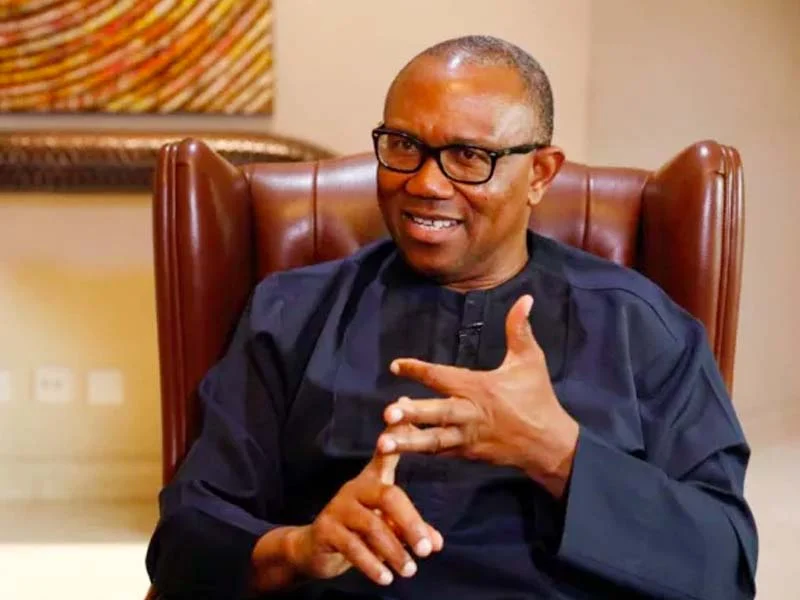
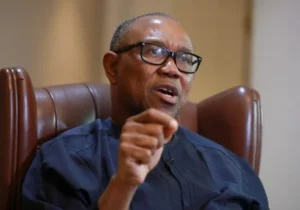
AWKA, NIGERIA — Former Anambra State Governor Peter Obi has stated that building strong public institutions is the essential foundation for sustainable development in Nigeria.
In the second part of his ongoing accountability series titled “Nigerians, Go and Verify”, Obi explained that his administration prioritized overhauling the machinery of government before tackling sector-specific challenges in education, healthcare, and security.
The 2027 Nigeria Democratic Congress (NDC) presidential candidate reflected on the state of Anambra when he assumed office, noting that both the physical infrastructure and administrative systems of the state were in a state of decay.
He emphasized that true reform required fixing the systems that allow a government to function, rather than merely putting up new buildings.
“A development vision, however noble, cannot succeed without strong institutions to drive it,” Obi stated. “We could not build a prosperous state on a cracked and unstable foundation.”
Obi has detailed how his administration rebuilt the machinery of government, restored state infrastructure, and slashed the cost of governance during his tenure.
Rebuilding the Seat of Government and the Judiciary
Obi explained that his administration had to undertake a systematic overhaul of critical state assets that had fallen into deep disrepair prior to his assumption of office. This began with rebuilding, re-equipping, and furnishing the Awka Government House, which had been vandalized and burnt in 2004. Alongside restoring the seat of executive power, his government rehabilitated the Governor’s Lodge in Amawbia and constructed a brand-new lodge in Onitsha to strengthen executive presence across the state’s administrative and commercial hubs.
The reforms also extended to the legislative and judicial arms of the state. Obi noted that his administration renovated the Anambra State House of Assembly Complex to provide lawmakers with a dignified working environment and supplied them with official vehicles.
To bolster judicial independence and improve the administration of justice, the government also provided brand-new vehicles to High Court judges and magistrates, marking the first time such provisions were made in the state’s history.
To end the inefficiency of scattered ministries, departments, and agencies operating from rented apartments, Obi constructed the two-phase, ultra-modern Chief Jerome Udoji State Secretariat Complex. The facility brought civil servants together under one roof, while permanent secretaries and directors received official vehicles for the first time to aid administrative mobility. He stated that his administration also facilitated the establishment of the Federal Secretariat Complex in Awka to foster stronger state-federal collaboration.
Grassroots Impact and Fiscal Prudence
Beyond the state capital, Obi emphasized that his government prioritized grassroots governance by constructing and renovating local government secretariat complexes in areas such as Onitsha North, Onitsha South, Dunukofia, Awka South, and Anaocha. These grassroots hubs were equipped with essential service infrastructure, including finance blocks, traditional rulers’ council buildings, tax offices, health blocks, and recreational facilities to bring governance closer to the people.
Alongside physical rebuilding, Obi highlighted a strict commitment to reducing the cost of governance. He stated that his administration eliminated wasteful spending and ostentatious expenditures, redirecting every kobo toward public infrastructure and human capital development.
Framing the Anambra experience as a blueprint for national recovery, Obi argued that Nigeria’s primary challenge is not a lack of resources but weak institutions, mismanaged funds, and misplaced priorities.
He assured Nigerians that the same financial discipline and institutional focus can be replicated at the national level, promising to present to Nigerians his administration’s documented investments and measurable outcomes in the education sector for public scrutiny.

A politics and current affairs reporter covering breaking political news, government affairs, elections, policy, and stories that matter.