Peter Obi Rejects Anambra Debt Claims, Details $150m Savings Legacy
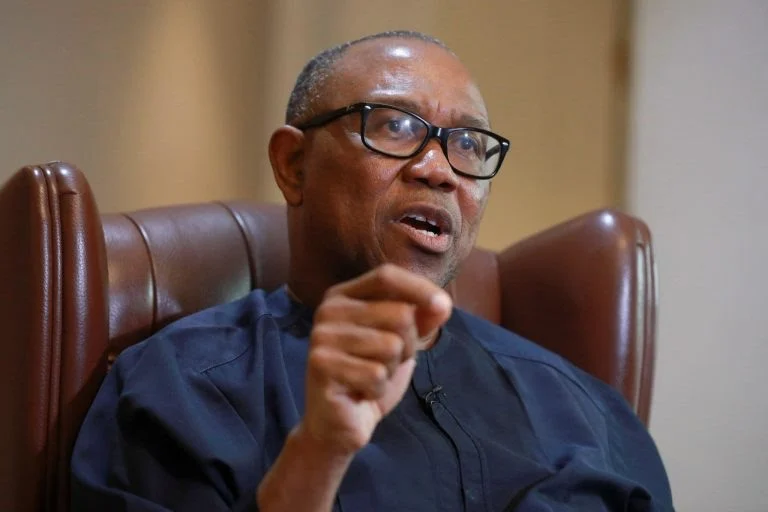
Former Anambra State Governor and presidential candidate Peter Obi has strongly refuted claims made by the Anambra State Government regarding a $123.77 million debt allegedly accumulated during his tenure, describing the administration’s calculations as an incorrect application of public-sector accounting.
In a detailed response addressing recent public discussions, Obi clarified that his administration did not secure conventional commercial loans or bonds from any financial institution.
Instead, he maintained that the funds in question were concessionary, long-term development-support facilities secured by the Federal Government from multilateral institutions like the World Bank and the International Fund for Agricultural Development (IFAD) for specific state programmes.
According to Obi, the current state administration conflated three distinct financial categories: the total approved budget for multiyear development programmes, the actual amount drawn down during his tenure, and the outstanding balance remaining when he left office on 17 March 2014.
“The eight facilities identified were primarily World Bank and IFAD development programs negotiated by the Federal Government, with participating states receiving access to the funds through subsidiary arrangements,” Obi stated, noting that repayment for such concessionary funds is typically spread over 25 to 30 years.
To back his position, Obi cited historical records from the Debt Management Office (DMO). He noted that the DMO recorded Anambra’s total external debt at approximately $18 million when he assumed office in March 2006, which rose to about $30 million by the time he departed in March 2014, and reached $45.15 million by December 2014. He questioned how the state government could claim he left a legacy of $123.77 million in debt when official federal records show the state’s total external debt was $30 million at the end of his tenure.
Furthermore, Obi reasserted that his administration left the state in its strongest financial position to date, with no outstanding arrears for verified contractors, pensions, gratuities, or salaries. He highlighted a $150 million foreign-currency investment component left in state accounts upon his departure, which he estimated would have grown to approximately $335 million today through compound interest if left untouched.
Obi argued that even if the current administration’s debt assertions were accurate, the accrued annual yields from those savings—estimated at $10 million annually—would have been more than sufficient to completely liquidate the $92.35 million balance reported by the state government as outstanding by June 2026.
Addressing wider political speculations, the former governor stated that he holds no animosity toward the current governor, Charles Soludo, or any other state executive. He explicitly ruled out any future run for the governorship of Anambra State, even in the event of constitutional amendments, and appealed to state governors to ensure a level playing field for all political contenders to campaign freely.
Obi concluded by stating that he will not engage in further public back-and-forth regarding his past administration, choosing instead to focus his attention on the socio-economic challenges facing everyday Nigerians through his ongoing presidential ambitions.