Why Tanzania’s President Samia Suluhu Hassan Missed Her Husband’s Funeral
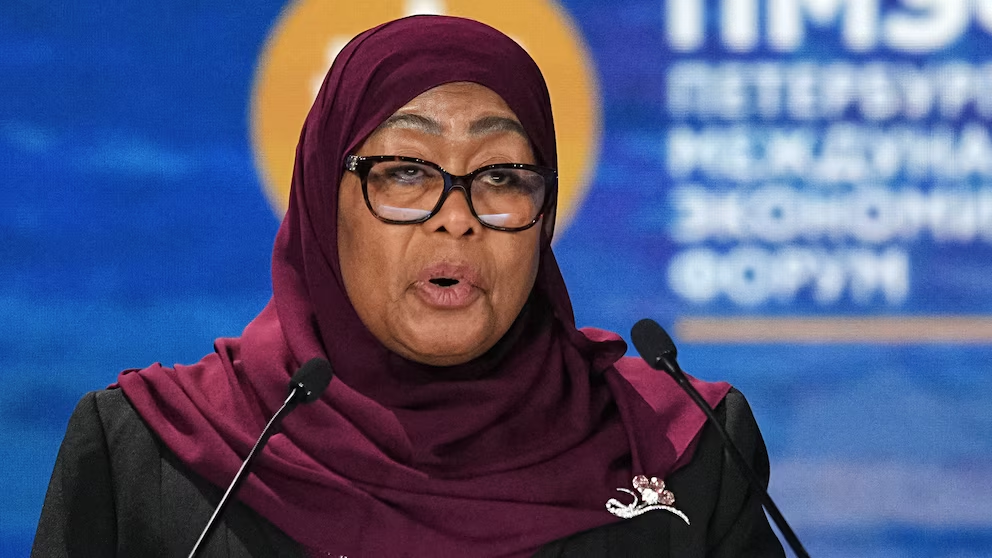
When Tanzania’s First Gentleman, Hafidh Ameir Hassan, was laid to rest in Kizimkazi, Zanzibar, on Monday, September 7, 2026, many noticed a deeply personal absence.
While Zanzibar President Hussein Ali Mwinyi and hundreds of mourners gathered at the graveside to pay their final respects, President Samia Suluhu Hassan was not among them.
Earlier that day, Hafidh Ameir passed away at Emilio Mzena Memorial Hospital, where he had been receiving treatment for a heart condition.
Following Islamic rites, Grand Mufti Sheikh Saleh Omar Kaabi led the Janazah prayers before the body was taken to the family’s ancestral home in South Unguja for burial.
The president’s absence at the graveside might seem unusual, but it stems from deeply rooted traditions.
While Muslim women are not strictly forbidden from attending funerals altogether, their participation at the actual graveside burial varies greatly depending on cultural traditions, local customs, and different legal schools of Islamic jurisprudence (fiqh).
In Zanzibar, local Muslim customs historically dictate that women do not accompany the deceased to the exact burial site.
Beyond the burial itself, President Samia has now entered iddah, the traditional Islamic mourning period for widows. For a woman who is not pregnant, this period lasts exactly four months and 10 days. It is a time for quiet reflection and privacy, during which a widow refrains from using perfumes or adornments and generally remains at home unless a pressing necessity arises.

Editor-in-Chief at Klick News