Prince Lateef Fagbemi and the Burden of Rescuing Nigeria’s Historically Tainted Justice Ministry
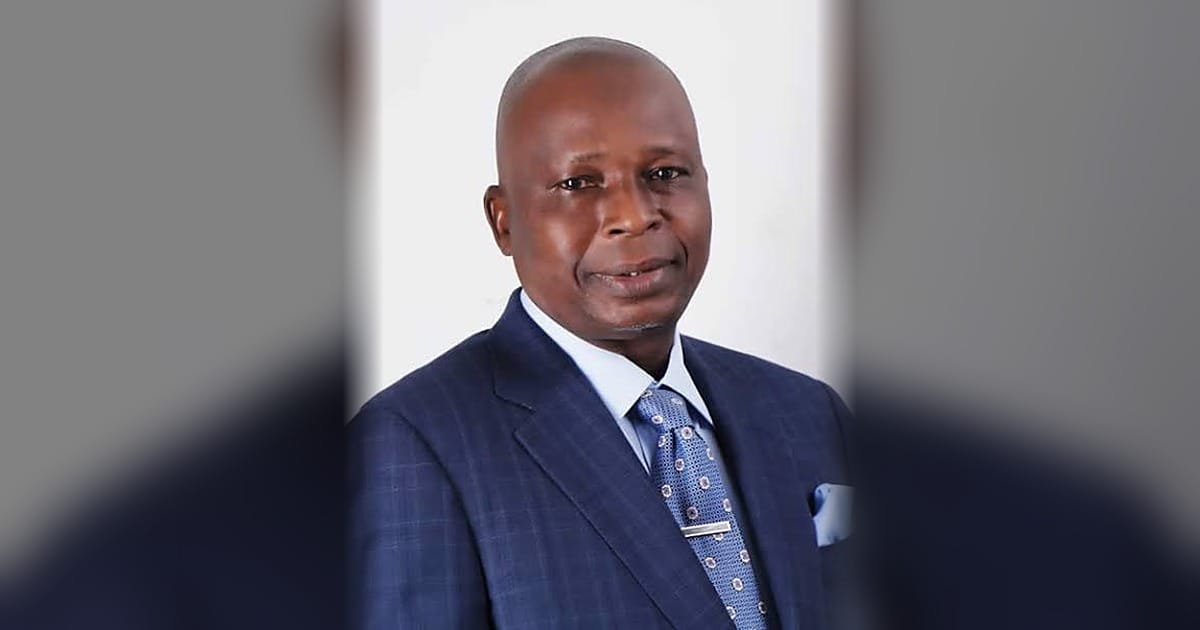
As Prince Lateef Fagbemi, SAN, intensifies his agenda of restoring discipline to an office long shadowed by controversy, the real test is whether Nigeria’s Chief Law Officer and the institution he leads can remain resilient under political pressure and loyal to the rule of law.
Gaius Julius Caesar understood one thing many modern public officials still pretend not to understand: in public life, perception can be as damaging as guilt.
Caesar’s Standard and Nigeria’s Reality
Caesar was no saint. He was ambitious, ruthless, and, by many accounts, dictatorial. But even he knew that power without credibility is a poisoned gift.
In Plutarch’s Life of Caesar, we find the story behind one of history’s most repeated lines.
The story goes that Caesar divorced his second wife, Pompeia, over a rumour of an affair. Divorce was not exactly unusual in ancient Rome. Historians note that couples could end a marriage by mutual consent, even though issues like infertility or adultery often provided the usual grounds. In Caesar’s case, there was no proof of adultery. There was only suspicion.
The drama began when a young politician, Publius Clodius Pulcher, allegedly disguised himself as a woman and entered Caesar’s house. That alone would have been scandalous enough. But Clodius was said to have entered the women-only section where a sacred religious festival was taking place.
When Caesar heard about it, he immediately sought a divorce, even though there was no evidence that Pompeia had done anything wrong. Later, when the matter went to trial and Caesar was called to testify, he surprised the court by saying he knew nothing about the allegation against Clodius. So he was asked, “If he knew nothing, why did he divorce his wife?” Caesar answered, “Because my wife ought not even to be under suspicion.”
That phrase has endured because it states a simple truth: those who hold high office must not merely avoid wrongdoing; they must avoid the stench of it.
“Those who hold high office must not merely avoid wrongdoing; they must avoid the stench of it.”
The Caesar standard remains the ultimate test of public integrity.
The Office That Lost Its Way
In Nigeria, sadly, that standard has often been treated as a luxury. Too many public officials have dragged public office through mud and then asked citizens to applaud them for not sinking completely.
This is why the office of the Attorney General of the Federation and the Minister of Justice matter so much. It is not an ordinary ministerial seat. The 1999 Constitution, as amended, singles it out. Section 150(1) makes the AGF the Chief Law Officer of the Federation and Minister of Justice. In plain language, the office carries enormous power: it advises the government, shapes prosecutions, influences legal policy, and, at its best, stands as the conscience of the state.
But the Nigerian experience has too often been embarrassing.
Cleaning Up After Malami
Few occupants of the office of the Attorney General of the Federation and Minister of Justice have left it with their reputations fully intact. From Michael Aondoakaa to Abubakar Malami, controversy has clung to the office like smoke after a fire. Malami, in particular, arrived without the aura of a towering legal mind. He was better known as part of Buhari’s political circle than as a lawyer who had shaken the courtroom. As a judiciary desk editor then, I did not see in him the brilliance or weight the office demanded. Some journalists even mocked him as a “Federal Character” Senior Advocate of Nigeria, a cutting way of saying his rise looked more political than exceptional. His appointment may not have shocked many people, knowing Nigeria’s history of elevating incompetence due simply to its proximity to power; but the damage his tenure left behind certainly did.
That is the heavy baggage Fagbemi inherited. He did not merely walk into an office; he walked into a stable that needed cleansing. Legal absurdities had to be reviewed. Public confidence had to be rebuilt. The dignity of the AGF’s office had to be rescued from the suspicion that it had become an instrument of political convenience. If there was any lawyer equipped for that assignment, Fagbemi had a strong claim. He came with courtroom weight, a compelling profile, backed by decades of courtroom experience, technical expertise, and a hard-earned reputation independent of political connections. Insiders note he was actually reluctant to accept the AGF position. As a private, media-shy individual whose powerful oratory was strictly reserved for courtrooms, the sudden transition to a highly visible public office was a stark departure from his decades in private legal practice.
“The dignity of the AGF’s office had to be rescued from the suspicion that it had become an instrument of political convenience.”
An institution struggling to reclaim public trust.
Anti-Corruption Beyond Headlines
Since assuming office, Fagbemi has tried to pull the AGF’s office away from the theatre of power and back toward the discipline of law. That may sound basic, but in Nigeria it is almost radical. He has warned state attorneys general and investigators against the lazy habit of filing “bogus 50-count charges” to win headlines before doing the hard work of investigation. His message is blunt: stop arresting first and thinking later. Build the case. Respect the law. Then prosecute.
“Stop arresting first and thinking later. Build the case. Respect the law. Then prosecute.”
Due process before publicity.
This is particularly important in the anti-corruption space, where Nigerian governments have too often confused noise with results. The Economic and Financial Crimes Commission (EFCC) and the Independent Corrupt Practices and Other Related Offences Commission (ICPC) do not need political puppeteers; they need room to work, clear legal backing, and accountability. Fagbemi’s approach has been to strengthen that space rather than turn the agencies into megaphones for government propaganda.
So far, the signs are worth taking seriously. They are best understood not as isolated announcements, but as parts of a larger attempt to restore method, restraint, and credibility to federal justice administration.
In terms of asset recoveries, the anti-graft agencies have reported substantial successes under the current administration. The ICPC announced recoveries of ₦37.44 billion and $2.353 million in 2025, while the EFCC reported more than ₦566 billion, $411 million, and 1,502 properties recovered between October 2023 and September 2025. The recent final forfeiture order against former AGF Abubakar Malami, reportedly worth more than ₦200 billion, adds to those figures. Yet recoveries should not be treated as trophies. Nigerians have a right to know where recovered assets go, how they are managed, and whether they ultimately serve the public interest.
But it goes beyond that. Transparent tracking is crucial, which is why Fagbemi’s push for a central database of forfeited assets deserves attention, because transparency has often been the missing link in Nigeria’s anti-corruption efforts. Recovering stolen wealth is one thing; ensuring that it does not disappear into another cycle of opacity is quite another.
Transparency, however, is only one side of the work; the ministry’s emphasis on institutional reform to improve prevention is equally important. No country can prosecute its way out of corruption entirely. A stronger system is one that closes loopholes, strengthens oversight, and makes theft more difficult in the first place, rather than merely chasing offenders after the damage has been done.
That same insistence on method should also guide the government’s response to crimes that threaten national survival, especially terrorism.
Terrorism Prosecution Beyond Excuses
Fagbemi has also moved into an area where excuses have long been cheaper than action: terrorism prosecution. Working with the Director of Public Prosecutions of the Federation, Rotimi Oyedepo, SAN, he has overseen legal teams involved in mass terrorism trials.
This matters because the previous handling of terrorism-related files left behind disturbing questions. Malami’s era was dogged by allegations, evasions, and public distrust over sensitive prosecutorial decisions, including the alleged failure to act decisively against terrorism financiers. A country bleeding from insurgency cannot afford a justice ministry that appears hesitant, compromised, or asleep at the wheel.
Working through detailed investigative work by the Department of State Security Services (DSS) headed by the highly result-oriented Oluwatosin Ajayi, files that were buried have been unearthed, and criminals put to where they belong. At the Federal High Court in Abuja, prosecution teams under the federal government have handled large numbers of terrorism suspects accused of active insurgency, aiding and abetting, and terrorism financing. But numbers alone should not impress anyone. What matters is whether the cases are credible, timely, and anchored in evidence. Fagbemi’s challenge is to prove that Nigeria can be tough on terrorism without trampling on due process and firm on national security without turning justice into a conveyor belt.
“Nigeria can be tough on terrorism without trampling on due process.”
Security must still answer to the law.
Fighting Back in Foreign Courts
Outside Nigeria, the stakes are just as critical. The country has too often walked into international commercial disputes looking careless, exposed, and badly advised. The Process & Industrial Developments (P&ID) case was perhaps the most humiliating example: an $11 billion arbitration award linked to a failed gas processing contract that threatened Nigeria’s foreign reserves and sovereign assets.
To its credit, the government did not roll over. It fought back with a serious legal defence and won a major victory in the United Kingdom, where the courts dismissed P&ID’s claims and ordered the company to pay significant legal costs to Nigeria. That outcome was more than a courtroom win; it was a badly needed reminder that Nigeria is not always condemned to be the careless victim of predatory deals and sloppy governance.
Other arbitration successes involving foreign contractors also matter. Every avoided liability is money that can go into roads, hospitals, schools, and security, rather than disappearing into legal settlements caused by official negligence. For a country with Nigeria’s needs, defending the public purse is not a technical achievement; it is a moral obligation.
The Real Test of Fagbemi
“The real test is whether the AGF’s office can remain loyal to the law when politics comes knocking.”
Where principle meets political pressure.
Fagbemi deserves credit for the enormous work he has put in so far to steady an office that had become too comfortable with controversy. But he should also know that Nigerians have seen many promising beginnings that can fritter away. The real test is not whether speeches sound right or policies look neat on paper. The real test is whether the AGF’s office can remain loyal to the law when politics comes knocking, when powerful friends are implicated and when inconvenient cases land on the minister’s table. If Fagbemi can hold that line, he will not merely cleanse the stable; he will help restore the idea that Nigeria’s Chief Law Officer can be powerful, principled, and, like Caesar’s wife, above suspicion.

Editor-in-Chief at Klick News