President Tinubu Projects 4.43% GDP Growth and Drop in Inflation Amid Infrastructure Push
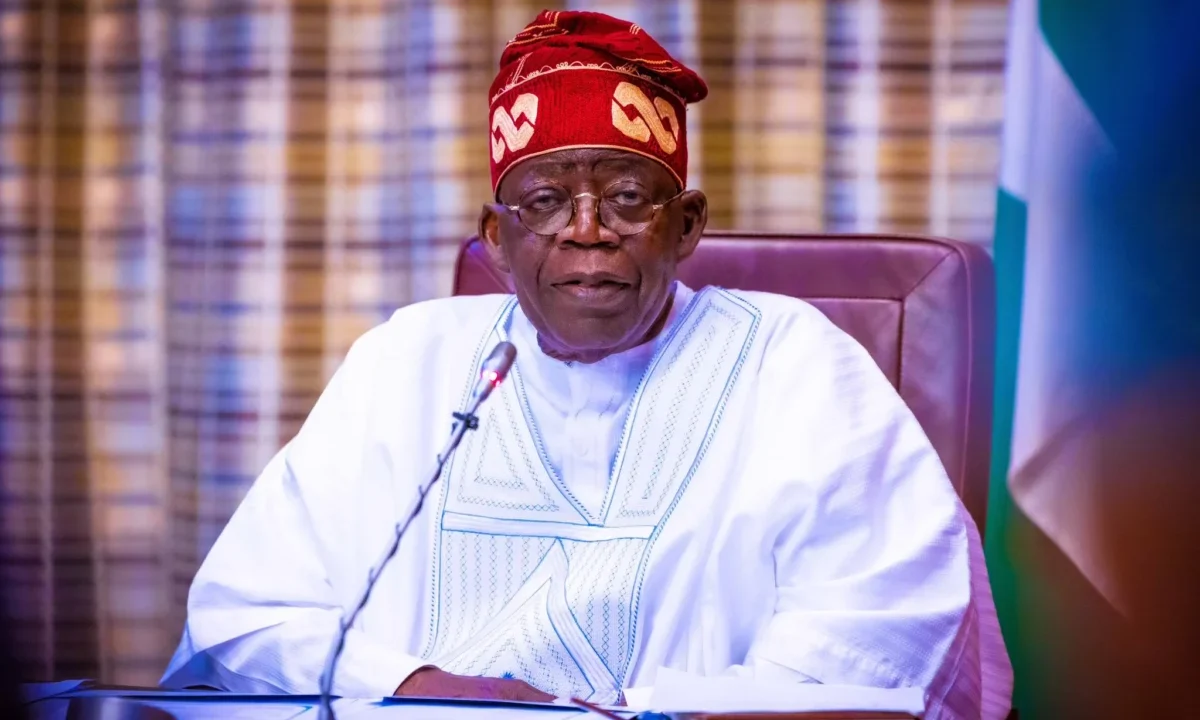
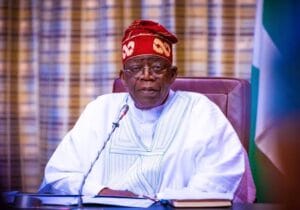
ABUJA, NIGERIA — President Bola Tinubu has strongly defended his administration’s decision to secure new international loans, stating that the focus of his economic strategy rests on asset creation rather than the accumulation of debt.
In a comprehensive essay titled “From reforms to delivery: Our infrastructure investment and growth strategy,” President Tinubu directly addressed criticisms from opposition leaders regarding Nigeria’s borrowing trajectory.
“The real question is not how much we borrow, but what we build, what value we create and what future we leave behind,” Tinubu wrote, arguing that strategic borrowing is essential to expanding the nation’s productive capacity.
The President emphasized that his administration’s target of building a $1 trillion Nigerian economy by 2030 requires an aggressive overhaul of the nation’s foundational infrastructure.
“We cannot build a $1 trillion economy with infrastructure designed for an economy a fraction of that size,” Tinubu stated, adding that such a milestone will not emerge by declaration alone but must be systematically engineered through sustained investment, industrialisation, and expanded trade.
To support this growth, the administration has earmarked several mega-projects designed to reshape Nigeria’s economic geography, lower domestic logistics costs, and attract foreign direct investment.
The administration insists its key infrastructure priorities remain the Lagos-Calabar coastal highway project, which it projects will cut corridor logistics costs by 15 to 20 per cent, boost national GDP by up to two per cent, and generate 100,000 direct and 150,000 indirect jobs.
He also highlights the Sokoto-Badagry superhighway, the trans-Saharan superhighway, the national electricity grid upgrades and the upgrades of major Lagos commercial ports.
“We are not simply building highways,” Tinubu noted. “We are opening economic corridors, connecting markets, unlocking industries and reshaping Nigeria’s economic geography.”
Economic Indicators Show Recovery
Defending the macroeconomic reforms initiated since May 2023—including the removal of the petrol subsidy, unification of the exchange rate, and aggressive tax overhauls—the President highlighted key statutory improvements that have restored international investor confidence.
According to official data cited by the President, Nigeria’s real Gross Domestic Product (GDP) growth reached 4.43 per cent in the second quarter of 2026.
Concurrently, coordinated fiscal and monetary efforts successfully pulled headline inflation down to 14.63 per cent in September, a significant drop from the 20.98 per cent recorded during the same period last year.
The state’s balance sheet has similarly strengthened. As of October 9, 2026, Nigeria’s gross external reserves climbed to $55.1 billion, which includes roughly $46 billion in net reserves.
Driven by systemic tax reforms, the nation’s tax-to-GDP ratio also experienced a sharp upward trajectory, rising to 12.5 per cent from a historical baseline of seven per cent.
Tinubu argues that improving economic indicators are opening unprecedented doors for Nigeria to attract the long-term capital required to fund its massive structural deficits, positioning the current debt profile as a bridge to future industrial stability.

A politics and current affairs reporter covering breaking political news, government affairs, elections, policy, and stories that matter.