Nigeria: Why Vandals and Economic Saboteurs Thrive
By Emmanuel Nnadozie Onwubiko
Nigeria appears trapped in an endless struggle against a hydra-headed monster: the vandalism, theft, and destruction of critical infrastructure. These criminal activities undermine economic development, disrupt essential services, endanger lives, and impose enormous financial costs on a nation already grappling with deep economic challenges.
Across the country, organized criminal networks target electricity systems, transmission lines, railway components, bridges, and public assets. In the oil and gas sector, crude oil theft and pipeline sabotage drive massive revenue losses. These are not isolated incidents of petty theft; they represent a severe threat to national development, public safety, and economic stability.
The organized networks behind infrastructure vandalism
The sophisticated networks responsible for vandalizing pipelines, diverting petroleum products, and selling stolen crude raise serious questions about the effectiveness of existing security arrangements. They also fuel concerns about potential collusion between criminal syndicates and individuals within the institutions entrusted with protecting these public assets.
While allegations of complicity involving security personnel must be established through credible investigations, the sheer scale of oil theft demands a rigorous examination. How do these networks operate, who finances them, and how do stolen products reach their buyers without significant system failures or internal compromises?
Private security contracts and the protection of oil infrastructure
The federal government’s response has increasingly relied on engaging private security contractors. During former President Muhammadu Buhari’s administration, lucrative security contracts were awarded to private operators in the Niger Delta. This arrangement sparked intense public debate regarding the transparency, cost, and effectiveness of outsourcing the protection of nationally significant assets.
Supporters argue that conventional security arrangements repeatedly failed, making alternative strategies necessary. However, transferring public responsibility to private entities requires transparent procurement, independent oversight, and demonstrable results. The public deserves to know the exact cost of these contracts, how beneficiaries are selected, and whether the expenditure has significantly reduced theft. Ultimately, Nigeria needs a framework combining enforcement with accountability and measurable performance.
Nigeria lost 13.5 million barrels of oil worth $3.3 billion, NEITI reported
The financial consequences are staggering. At a recent conference, the Nigerian Extractive Industries Transparency Initiative (NEITI) reported that Nigeria lost approximately 13.5 million barrels of crude oil, valued at $3.3 billion, to theft and sabotage between 2023 and 2024.
This lost revenue could have financed the federal health budget for an entire year or expanded energy access for millions of households. These numbers reflect not just financial loss but also institutional weaknesses and diminished public trust. Revenue lost to oil theft is revenue unavailable for hospitals, schools, roads, and social safety nets. The government must strengthen institutions responsible for preventing theft, investigating actors, and recovering proceeds.
Infrastructure Vandalism is Economic Sabotage
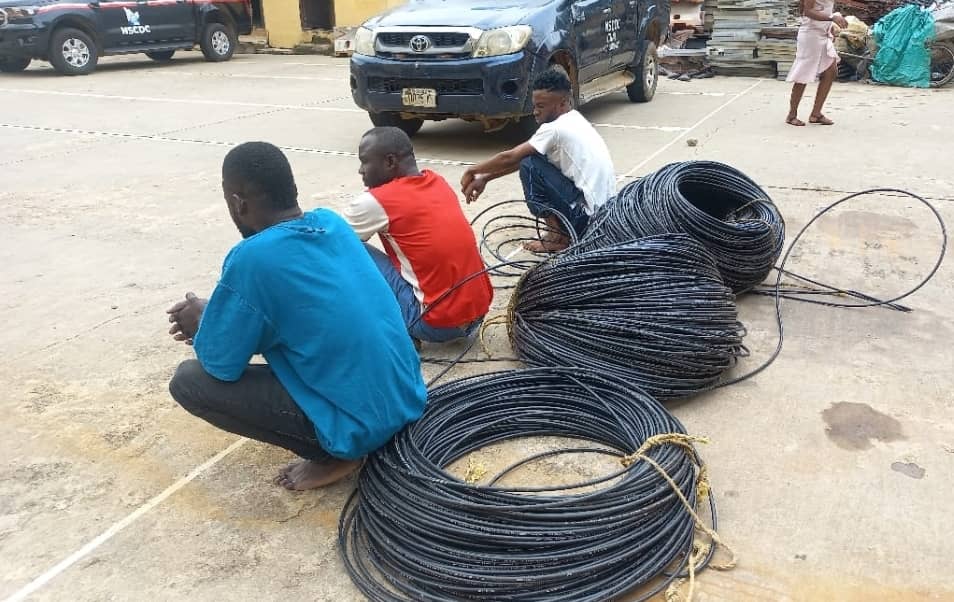
The destruction of public infrastructure is far worse than ordinary property theft. When criminals strip electricity cables, dismantle railway components, or damage bridges, businesses lose operating hours, households endure blackouts, and transportation networks stall. Public funds that should finance new projects are diverted to repair existing ones. In severe cases, vandalism leads to electrocution, train derailments, and structural failures.
The same applies to private property. Citizens who invest their life savings should not fear criminals destroying their investments for scrap material. The challenge is to dismantle the networks that finance and profit from this theft. Scrap-metal dealers who knowingly purchase stolen public assets must be held accountable, though legitimate recycling businesses should be protected from unfair targeting.
Existing laws against vandalism in Nigeria
While legal mechanisms exist to prosecute offenders, stronger enforcement and effective deterrence are critical. Nigeria has several federal and state laws addressing infrastructure destruction, including the Criminal Code and Penal Code. Three primary federal enactments serve as pillars for prosecution:
- The Miscellaneous Offences Act: Historically invoked for serious sabotage and damage to public assets, this Act requires the prosecution to prove specific elements of property damage. Penalties must strictly align with statutory text and relevant amendments rather than assumptions of mandatory long-term imprisonment.
- The Petroleum Production and Distribution (Anti-Sabotage) Act: This Act targets sabotage within the vital petroleum sector. Law enforcement must leverage it to thoroughly investigate wider criminal networks and pursue those who finance the illegal trade.
- The Electricity Act 2023: Providing a modern regulatory framework, this law addresses the theft of cables, destruction of transformers, and deliberate damage to grids, which heavily raise consumer costs and undermine power sector reforms.
Where existing legislation provides inadequate penalties for serious, organised infrastructure sabotage, the National Assembly and relevant state legislatures should consider proportionate reforms. Where the law already provides substantial penalties, the priority should be effective investigation, prosecution, and enforcement.
I believe that the most serious cases of economic sabotage—particularly those involving organised criminal networks, deliberate destruction of essential infrastructure, substantial financial losses, or conduct that endangers human lives—deserve to be treated with the gravity they warrant. For the gravest offences, lawmakers should consider whether substantially tougher penalties, including life imprisonment where constitutionally and legally justified, are appropriate.
At the same time, Nigeria must confront the market that sustains infrastructure theft. It makes little sense to arrest a person who removes electrical cables or railway components while ignoring the commercial networks that purchase, transport and resell the stolen materials.
Communities also need protection. Across parts of the country, families who have invested their savings in building homes and businesses face the threat of having their property damaged by criminals seeking iron rods, cables and other materials for resale. Such acts destroy not only property but also the security and dignity of the people affected.
In some communities, particularly in the South-East, residents have raised concerns about the theft of building materials and the perceived failure of law enforcement to secure accountability. These complaints deserve impartial investigation, and any allegations of bribery or the improper release of suspects should be substantiated and addressed through the appropriate legal channels.
Nigeria’s critical infrastructure belongs to the public and supports the welfare of millions of citizens. Its protection must therefore be a national priority.
The government should harmonise and strengthen the legal framework where necessary, improve coordination among enforcement agencies, ensure the transparent management of security contracts, and vigorously prosecute those whose guilt is established in court.
Above all, the country must end the culture of impunity that allows economic sabotage to remain profitable. Public infrastructure must be protected, legitimate businesses must be allowed to operate, and those who deliberately destroy the assets on which national development depends must be held accountable under the law.
(Emmanuel Nnadozie Onwubiko is the founder of the Human Rights Writers Association of Nigeria (HURIWA) and a former National Commissioner of the National Human Rights Commission of Nigeria)