The Job Applicant Who Won’t Attend the Interview: When A President Asks For Votes From A Distance
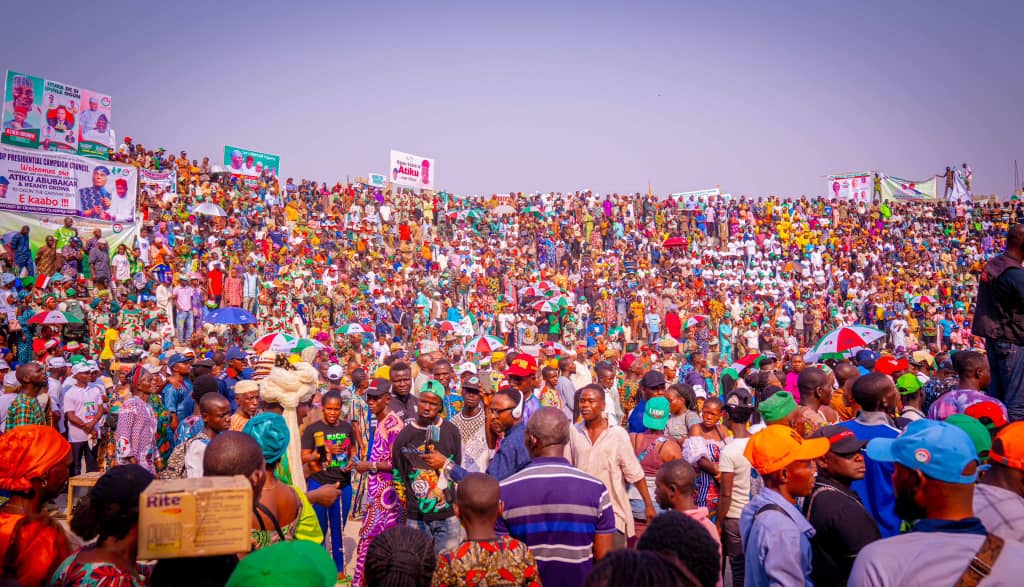
By Kenneth Eze, an Election Observer.
Abuja – Nigeria may be witnessing the emergence of a troubling precedent in its democratic journey: an incumbent seeking another mandate while appearing increasingly willing to delegate the direct work of asking voters for their support.
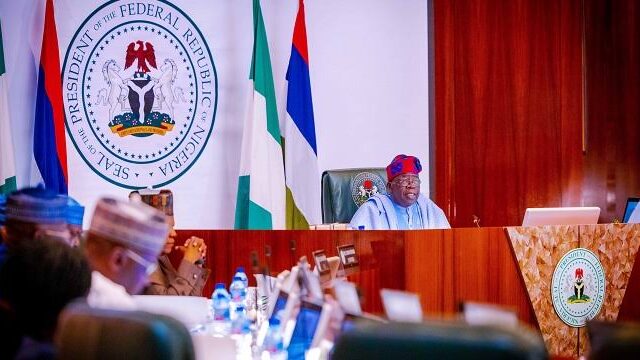
President Bola Ahmed Tinubu recently told his 2027 Presidential Campaign Council that he would not accompany them to every campaign event, citing the demands of governance, Nigeria’s financial obligations, and the need to attract investors. He nevertheless promised to speak directly to Nigerians at selected opportunities.
The explanation may appear good on its face. Governance must certainly continue during an election. But democracy poses another obligation: the candidate seeking the people’s mandate must remain accessible and accountable to the people whose votes he seeks.
How can a job applicant tell an employer that he will not attend the interview but expects to be given the job? That is the uncomfortable question confronting Nigerians.
The concern becomes more serious when placed against the wider perception that Nigeria’s political class increasingly treats electoral victory as an entitlement of incumbency rather than a mandate that must continually be earned. Elections are not predetermined coronations. They are contests in which citizens evaluate records, ask questions, and decide.
Tinubu’s position may therefore prove politically costly if voters interpret it as indifference to direct engagement. His absence could deny Nigerians the opportunity they have been waiting for: to interact with the President personally about the economy, inflation, living costs, insecurity, unemployment, taxation, economic reforms, and the overall experience of his administration.
There is also a broader issue of trust. Critics may ask: if the President needs voters, why is he leaving his political proxies to do the asking? The APC has defended the decision as a deliberate effort to prioritise governance, while opposition voices have interpreted it as avoidance of a difficult electorate. The latter is a political claim, not an established fact, but it illustrates the perception problem the strategy creates.
The President’s foreign travel record adds another layer to the public conversation. A Daily Trust analysis of available records found that Tinubu had spent approximately 261 days abroad since assuming office, across 51 foreign trips, by mid-2026. That figure does not prove neglect of duty, nor does it establish anything about his health. But it inevitably invites Nigerians to ask why extensive international engagements have been possible while extensive direct engagement with domestic voters is now being limited.
Is this really about governance—or avoiding the voter’s anger? This question cannot be ignored. Some critics argue that limiting the President’s physical campaign appearances could be a calculated way of avoiding the anger of Nigerians who are experiencing severe economic hardship.
While that interpretation has not been established as fact, it would be unfair to present it as such. Nevertheless, it is a political perception that the administration must confront. If citizens are angry about the economy, the democratic answer should not be avoidance. It should be engagement.
The President should be willing to stand before Nigerians, hear their frustrations, and explain why his policies deserve another opportunity. Leadership becomes most accountable when it faces uncomfortable questions, not only friendly audiences.
Equally, speculation about the President’s health adds another layer of scrutiny. The President’s decision has also inevitably revived speculation among critics about whether he is physically strong enough to undertake an extensive national campaign. There is no credible basis here to present such speculation as fact, and health conditions should never become a weapon of political humiliation.
But there is another side to the issue. Persistent speculation thrives where uncertainty remains. If questions about a candidate’s capacity are becoming a significant part of public discussion, transparency and credible communication can help prevent rumours from filling the information vacuum.
There is nothing shameful about a health condition. The relevant democratic question is whether a candidate can discharge the constitutional responsibilities of the office. Nigerians therefore deserve factual information, not rumours, insinuations, or politically motivated propaganda.
Tinubu’s decision must also be viewed against the broader debate about incumbency. When an incumbent behaves as though electoral victory is already assured, citizens may understandably ask where the confidence comes from. Is the government relying on its record, its political machinery, the power of incumbency—or simply the assumption that the opposition cannot dislodge it? That is precisely where democracy becomes vulnerable. Elections are not coronations. They are contests for consent.
Ultimately, the ballot remains the property of the voter. No political machine, campaign council, governor, surrogate or advantage of incumbency can legitimately substitute for citizens’ informed consent.
If the administration believes its record deserves another mandate, the most convincing strategy is simple: face the people, defend the record, answer the difficult questions, and make the case for another four years.
The Nigerian voter is not an accessory to an election. The voter is the employer. And an employer has every right to insist that the applicant show up for the interview.
<You can reach me via engrchukeze2014@gmail.com>