FG Disputes 124% Debt-Service Ratio; Claims Actual Figure Is 60%
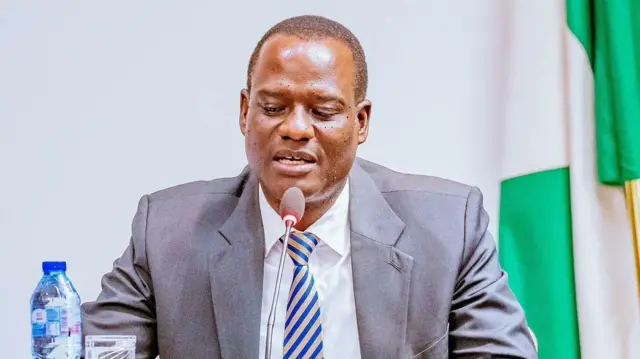
ABUJA, NIGERIA — The Federal Ministry of Finance has rejected claims that the Federal Government’s interest payments consumed 124% of its revenue in the first half of 2026, clarifying that the actual full-year debt-service-to-revenue ratio is below 60%.
Responding to public commentary linked to the World Bank’s October 2026 Nigeria Development Update, the Ministry described the 124% figure as “misleading” due to mismatched data and incomplete revenue tracking.
The Ministry of Finance argued that the 124% narrative is structurally flawed, citing wrong data, reliance, and mismatched figures. It says the interest calculation erroneously includes external loans serviced by the Federal Government on behalf of state governments and that pairing total national debt service against federal-only revenue overstates the true fiscal pressure.
The Ministry also highlighted that independent revenues earned by government agencies and enterprises that have not yet been remitted to the Treasury were not factored into the analysis.
It further noted that Nigeria operates seasonal tax timelines, explaining that collections historically surge during the second half of the year due to the statutory timing of major payments.
According to the finance authorities, a similar trend occurred in 2025, where the H1 ratio peaked at 156% but ultimately dropped below 60% by the end of the full fiscal year.
Revenue Growth Outpaces Interest Costs
The government argues that based on its official data, the federal fiscal trajectory has improved significantly year-on-year due to ongoing economic reforms.
According to its fiscal metrics, the first half (H1 2025) federal revenue was ₦3.6 trillion but claimed ₦6.2 trillion in the corresponding period of 2026, representing about a 72% growth rate.
Also, in H1 of 2025, interest payments stood at ₦5.6 trillion and rose marginally to ₦7.7 trillion in H1 of 2026, representing a 38% growth rate.
The federal government insisted that its revenue is growing nearly twice as fast as interest costs, and as a result, the mid-year interest-to-revenue ratio fell by 32 percentage points (from 156% to 124%), while the fiscal gap narrowed from ₦2.0 trillion to ₦1.5 trillion.
World Bank Projects 46% Debt Service for Full-Year 2026
The Ministry emphasized that debt sustainability cannot be accurately measured using a six-month snapshot. It pointed out that the same World Bank report projects Nigeria’s full-year 2026 debt service—covering both interest and principal payments—to settle at 46% of revenue.
Furthermore, the government maintained that all public borrowing remains lawful, transparent, and fully compliant with the Fiscal Responsibility Act 2007 and the Debt Management Office Act 2003.
“Every naira borrowed by the Federal Government falls within the limits approved by the National Assembly under the 2026 Appropriation Act,” the statement concluded, urging analysts to evaluate public finance data with stricter contextual rigour.

A business journalist focused on uncovering the stories shaping companies, markets, industries, and the wider economy. Skilled at turning complex financial and corporate developments into clear, engaging stories that inform and connect with readers. Committed to accurate, insightful reporting that goes beyond the headlines.