New Ebola Crisis Hits Africa Five Years After COVID-19
Five years after COVID-19 triggered widespread social and economic collapse, African nations are facing a fresh health crisis before their national economies and households have fully stabilized.
The current Ebola outbreak has officially escalated into a Public Health Emergency of International Concern (PHEIC).
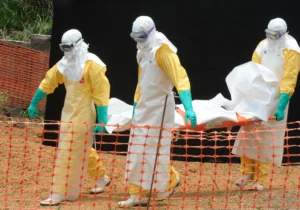
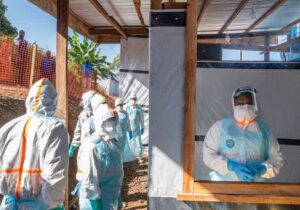
Uniquely driven by the rare Bundibugyo virus strain, this crisis presents a distinct challenge: unlike the more common Zaire strain, there are currently no licensed vaccines or approved antiviral treatments available for Bundibugyo. As a result, health officials must rely entirely on supportive clinical care, strict isolation protocols, and aggressive contact tracing to manage the spread.
The virus’s rapid geographic expansion and the harsh operational realities on the ground highlight how unpredictably the outbreak is evolving across the continent.
The Epicentre: How the DRC is Battling the Crisis
The current outbreak originated in the Democratic Republic of the Congo (DRC), a nation that has historically been the epicentre of the virus.
Navigating its 17th Ebola outbreak—officially declared on May 15, 2026—the DRC has recorded a staggering 9,552 confirmed cases and 4,602 deaths as of late October 2026. This indicates a severe case fatality rate approaching 50%.
While the government has implemented sustained measures to contain the disease, frontline efforts face interconnected hurdles primarily because the outbreak is unfolding within an active conflict zone.
The primary epicentre remains Ituri Province, which alongside North Kivu accounts for 75% of cumulative cases. Both northeastern regions are plagued by armed conflict and mass displacement, making it highly dangerous for medical teams to track contacts or access remote villages.
Compounding these security threats is systemic strain. According to a report by the International Rescue Committee,
“Fragile health systems, extreme poverty, and the ongoing impact of funding cuts have left millions of people in the region vulnerable.”
The report also highlighted weak health services. “In some areas, health facilities have almost no protective equipment left for workers to use safely. When those systems fail, a disease like Ebola can spread further and faster before anyone realizes what’s happening,” it noted.
Humanitarian data also reveals a stark gender disparity: women and girls represent nearly two-thirds of suspected cases due to their traditional roles as primary caregivers and community health workers.
Small Wins Amid Geographical Spread
While the numbers continue to climb, a closer look at the data shows a volatile but resilient containment landscape. In early October, the Congolese Ministry of Health noted a total halt of new infections across several previously hit provinces, including South Kivu and South Ubangi, proving that aggressive local containment protocols can yield results.
Furthermore, amidst the high death toll, medical facilities have successfully treated and discharged over 2,550 recovered patients using rigorous supportive hydration and targeted symptom management.
Despite these localized successes, however, the virus continues to breach new lines. Health authorities recently tracked the virus expanding into North Ubangi, making it the eighth Congolese province infected. The province sits directly on the fragile, porous border of the Central African Republic (CAR).
Regional Spread: Other Affected Countries
Because of highly fluid borders and travel routes across East, Central, and West Africa, the emergency has rapidly decentralized.
Uganda, jointly declared the initial outbreak with the DRC in May 2026. It shares an immediate border with the epicentre in Ituri, where cross-border crossings are frequent.
Kenya is currently battling its own localized crisis with 9 confirmed cases, including fatalities. Previously classified as an at-risk nation, Kenya is now an active transmission zone after an infected traveller crossed the border, triggering a localized cluster.
The Central African Republic (CAR) is considered to be under extreme, immediate threat due to its proximity to the newly infected North Ubangi province in the DRC.
Nigeria has become the fifth country dragged into the Ebola emergency after recording a confirmed imported case in Abuja. The patient travelled directly from the East African border zone. This represents the first major jump of the 2026 Bundibugyo outbreak into West Africa, underscoring how rapidly a lack of strict cross-border flight screenings can escalate a regional crisis into a continental one.

Editor-in-Chief at Klick News