National Policing Bill 2026: FG Launches Portal, Invites Public Memoranda on State Police Reform
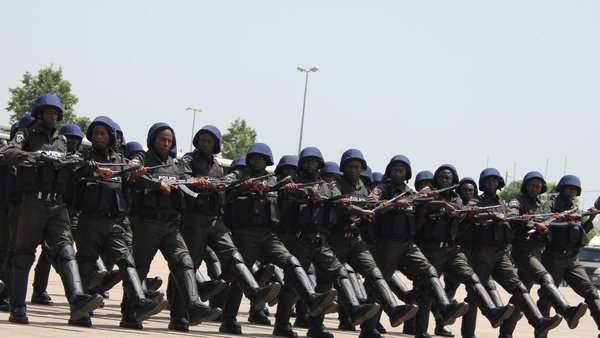
ABUJA, NIGERIA — The Federal Government has officially launched a tight seven-week timeline to draft the highly anticipated National Policing Bill, opening a nationwide public consultation window to transition Nigeria into a dual-policing architecture.
The landmark reform moves the country away from a single, centralized national police model toward a dual system comprising the Federal Police Service and State Police Services.
The Chairman of the Presidential Working Group on the National Policing Bill and Chief of Staff to the President, Femi Gbajabiamila, announced the development during a press briefing at the State House in Abuja.
The Road to State Police: A Phased Transition
While the National Assembly has achieved major milestones regarding the constitutional amendment to permit state police, Gbajabiamila clarified that constitutional changes alone cannot make the system operational. “The amendment is enabling and phased,” the Working Group noted. “A State Police Service may exist in constitutional terms, but it cannot begin operational policing unless it is established by State law and certified as meeting national minimum standards.”
The upcoming National Policing Bill is the explicit Act designed to set those rigorous benchmarks.
To ensure technical compliance, President Bola Ahmed Tinubu approved a multidisciplinary Policy Advisory Committee. Led by retired Justice Mohammed Abdullahi Liman, JCA, the committee features experts from the judiciary, the Nigerian Bar Association (NBA), the Nigeria Governors’ Forum (NGF), security agencies, and State Attorneys-General representing all six geopolitical zones.
Safeguards Against Abuse and Political Persecution
Addressing deep-seated public anxieties regarding the potential weaponization of regional forces, Attorney-General of the Federation and Minister of Justice, Lateef Fagbemi, SAN, emphasized that national minimum standards are engineered specifically to prevent state police from becoming instruments of political persecution.
Gbajabiamila reinforced this statement, affirming that national standards will serve as a safeguard so that no Nigerian receives substandard security based on their geographic location. States will hold the flexibility to exceed baseline requirements, but a fundamental level of human rights and security protection remains non-negotiable.
Furthermore, states that lack the immediate financial or infrastructural capacity to launch independent forces will not be left vulnerable; they will continue to receive full operational backing from the federal Nigeria Police Force until local certification standards are met.
Have Your Say: How to Shape Nigeria’s New Dual-Policing Architecture Before August 13
The Presidential Working Group has identified 17 priority thematic areas open for public input, spanning critical issues such as federal interventions, firearms control, jurisdiction, accountability, and fiscal funding frameworks.
Citizens, civil society organizations (CSOs), and professional bodies who want their positions on record must submit formal memoranda before the fast-approaching deadline on 13 August 2026