After Evacuation of Sole Ebola Patient, Nigeria Shifts Attention to Observing Identified Contacts

ABUJA, NIGERIA — Nigeria’s Coordinating Minister of Health and Social Welfare, Professor Muhammad Ali Pate, says federal authorities have officially shifted their full public health response toward the rigorous monitoring of identified contacts and preventing any potential community transmission.
This follows the medical evacuation of the nation’s sole confirmed Ebola index patient from the country.
The index case—a 42-year-old woman who arrived in Abuja on an international flight from Uganda—was flown out of the country to Switzerland on a specialised medical evacuation flight on Monday morning.
According to health officials, her clinical condition had significantly improved, and she was tracking toward stable baselines prior to departure, though strict containment protocols remained active during the airlift. Her spouse, who has remained entirely asymptomatic, was evacuated alongside her.
The 42-Day Countdown Begins
With the evacuation successfully completed, the World Health Organization (WHO) indicated that Nigeria currently has no active, hospitalised cases of Ebola within its borders. This development allows Nigeria to tentatively look toward an end to the scare, provided strict epidemiological milestones are met.
“If no further confirmed or probable cases are detected, Nigeria could progress towards declaring this outbreak over under WHO criteria, potentially as early as 7 December 2026,” Minister Pate stated on Monday.
The Minister emphasized that the December date remains strictly provisional. The Nigeria Centre for Disease Control and Prevention (NCDC) and the WHO must jointly validate a mandatory 42-day countdown—representing two full incubation cycles of the virus—before the country can officially be certified free of the disease.
Health authorities warned that the detection of even a single secondary case would immediately reset the 42-day clock back to zero.
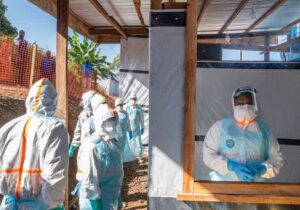
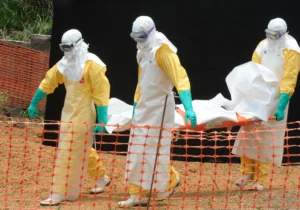
The containment strategy has successfully transitioned into a multi-agency operation involving the NCDC, the Federal Capital Territory Administration (FCTA), state health departments, and international partners. Response teams are maintaining strict, daily surveillance over the 44 close contacts originally identified, which include transit travellers, caregivers, and frontline healthcare workers.
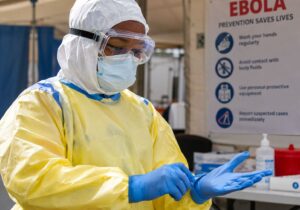
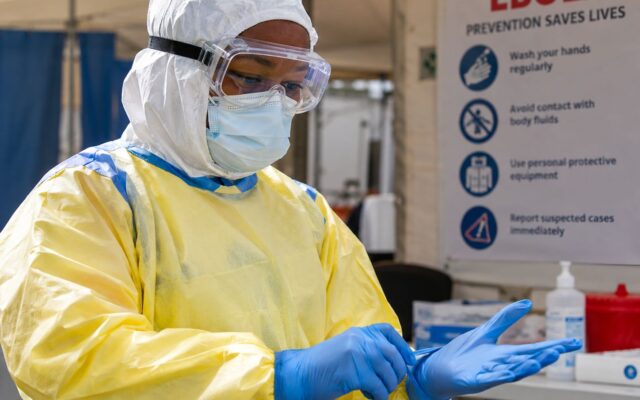
Furthermore, healthcare delivery systems and isolation wards nationwide have been mandated to remain on high alert, with upgraded infection prevention mechanisms actively deployed.
Authorities say directives have been issued across all state commands to immediately isolate and investigate any community health alerts or suspected symptoms.
Government Calls for Public Calm
Minister Pate commended the swift precision of the clinical staff and public health practitioners who managed both the initial isolation in Abuja and the highly regulated medical evacuation process.
Addressing the public, the Minister urged citizens to eschew panic, ignore unverified social media rumours, and actively cooperate with active contact-tracing teams on the ground.
The Federal Ministry of Health reiterated that transparency remains central to the government’s containment policy and advised Nigerians to log any health concerns or report suspected exposures via the NCDC’s toll-free public emergency line (6232).

Marcel Eze is a journalist covering health, public health, science, technology, and digital innovation for Klick News.