Abortion And The Rights Of The Unborn Child
By Emmanuel Nnadozie Onwubiko
This piece was first written and circulated for publication in 2012. I have revisited and substantially restructured it because of developments that have occurred since then, particularly the continuing international debate over the legal and human rights status of unborn children.
The question of whether an unborn child should enjoy legal protection and a right to life remains one of the most contested moral, legal, religious, and public-policy questions of our time. In recent years, several European countries have continued to revise their laws concerning abortion and end-of-life issues. France, for instance, amended its Constitution in March 2024 to provide that the law shall determine the conditions under which a woman is guaranteed the freedom to have recourse to voluntary termination of pregnancy.
The French constitutional amendment was approved by Congress on March 4, 2024, by 780 votes to 72. The amendment followed President Emmanuel Macron’s earlier commitment to constitutionalise access to abortion. In December 2023, the French government explicitly referred to the 2022 decision of the United States Supreme Court overturning Roe v. Wade as part of the international context surrounding the proposed constitutional amendment.
For those who believe that human life deserves legal protection from conception, however, such developments raise profound questions about the meaning and universality of human rights. If human rights are founded on human dignity, the question inevitably arises: at what point does the human person become entitled to the protection of those rights?
France and the constitutionalization of abortion
On March 4, 2024, French lawmakers meeting in Congress at the Palace of Versailles approved the constitutional amendment concerning abortion by an overwhelming vote of 780 to 72. The amendment inserted into Article 34 of the French Constitution the provision that the law shall determine the conditions under which a woman is guaranteed the freedom to have recourse to voluntary termination of pregnancy.
President Macron had announced his intention to pursue constitutional protection for abortion in March 2023. In December of that year, the French government explained that the proposed constitutional amendment was partly motivated by developments elsewhere, including the United States Supreme Court’s June 2022 decision overturning Roe v. Wade.
Supporters of the French amendment regarded it as a significant constitutional protection for women’s reproductive autonomy. For opponents of abortion, however, the development represents a fundamental conflict between the protection of women’s reproductive autonomy and the protection they believe should be accorded to unborn human life.
That disagreement cannot simply be dismissed as a political dispute. It goes to the heart of a much deeper question: who qualifies for the protection of human rights?
Pope Leo XIV and the protection of human life
That question acquired renewed significance during Pope Leo XIV’s apostolic visit to France from September 25 to 28, 2026.
On September 25, during his first major address in France, delivered at the Élysée Palace in the presence of President Emmanuel Macron, French authorities, civil-society representatives, and members of the diplomatic corps, the Pope spoke about the protection of human life and the ethical challenges associated with scientific and technological progress. The Vatican’s official account confirms that the Pope met privately with President Macron before addressing the gathering.
In his address, Pope Leo warned against social trends that could turn science and technology into profit-driven enterprises while referring to issues including genetic manipulation, surrogacy, and the trade in human organs. He also stressed the responsibility of every person to respect and protect human life.
The Pope’s intervention is consistent with the longstanding teaching of the Catholic Church on the sanctity and dignity of human life.
France has also recently legislated on end-of-life questions. The French Parliament adopted legislation concerning a legal right to “aid in dying” in July 2026. The law was subsequently reviewed by the Constitutional Council and promulgated on August 18, 2026, before publication in the Journal officiel on August 19.
These developments demonstrate how rapidly questions surrounding life, death, medical technology, personal autonomy, and human dignity are evolving in contemporary Europe.
The Catholic Church’s teaching on abortion
Pope Leo XIV’s intervention in France also serves as a reminder of the longstanding teaching of the Catholic Church on abortion.
The Catechism of the Catholic Church states that the Church has, from the earliest centuries, regarded procured abortion as morally wrong and teaches that human life must be protected from conception. Paragraph 2271 states that direct abortion is gravely contrary to the moral law.
The Catechism also points to early Christian writings, including the Didache and the Letter of Barnabas, as evidence that opposition to abortion and infanticide existed in early Christian teaching.
The Church’s position is therefore not presented by Catholic teaching as a recent response to contemporary political developments. Rather, it is understood as part of a longstanding theological and moral tradition concerning the sanctity of human life.
The Catholic Church also invokes biblical passages in support of its understanding of the dignity of unborn life, including Jeremiah 1:5: “Before I formed you in the womb I knew you, and before you were born I consecrated you.” The Catechism itself cites this passage when discussing respect for human life.
I fully subscribe to this teaching of the Catholic Church. My position in this article is therefore explicitly informed by my religious, ethical, and moral convictions.
The African understanding of the sanctity of life
As an African who deeply values our traditions and cultural heritage, I have always been particularly impressed by the reverence traditionally attached to human life in many African communities.
The arrival of a newborn child is celebrated as a profound symbol of continuity, hope, and the future of the community. In my own community of Arondizuogu, the birth of a child is regarded as an important celebration of life and family continuity.
The arrival of a new child represents the continuation of the human family. It reminds us that society does not exist merely for the present generation but also for generations yet unborn.
This cultural understanding of the sacredness of life is one reason I find the Catholic Church’s teaching on the protection of unborn life compelling.
If society is to preserve human civilisation, it must teach succeeding generations that human life possesses a value that cannot simply be reduced to convenience, economics, politics, or individual preference.
Nigeria’s debate over abortion
It was therefore natural for me to take seriously the arguments presented by Catholic Church leaders in Nigeria concerning abortion and maternal healthcare.
The Catholic Church in Nigeria has consistently opposed the legalisation of abortion while also calling for greater investment in maternal healthcare and the prevention of maternal deaths.
The Church’s argument is not simply that pregnancy should be preserved regardless of the circumstances. It also emphasises the need to ensure that Nigerian women have access to competent healthcare, skilled personnel, emergency obstetric services, and the infrastructure required to protect both mothers and children.
This is an important distinction.
Pregnancy is not a disease, and children should not be treated as disposable objects. At the same time, pregnancy and childbirth should not unnecessarily result in the death or permanent injury of either the mother or the child.
The objective of public policy should therefore be to create conditions in which mothers and babies can survive and flourish.
Maternal mortality and the responsibility of government
One of the most important questions in Nigeria’s debate over abortion is how the country can reduce maternal mortality.
Women should not die simply because they cannot obtain appropriate medical assistance during pregnancy or childbirth.
Access to skilled birth attendants, emergency obstetric care, blood transfusion services, treatment for malaria and infections, management of hypertension, reliable transportation, electricity, clean water, and functional referral systems are all important components of an effective maternal-health system.
A properly functioning primary healthcare system, supported by effective referral pathways, is essential.
The Nigerian government therefore has a profound responsibility to strengthen public healthcare infrastructure rather than allowing poor women to bear the consequences of systemic failures in healthcare delivery.
The extensive healthcare network operated by Catholic institutions in Nigeria could also contribute significantly to this effort through cooperation between government and faith-based healthcare providers.
The central objective should be clear: no Nigerian woman should lose her life because she was unable to obtain appropriate medical care during pregnancy or childbirth.
The unborn child and the language of human rights
This brings us back to the central question of this article: does the unborn child have human rights?
Those who oppose abortion argue that the unborn child is a human being whose right to life should be protected from conception. The Catholic Church explicitly teaches that human life must be respected and protected from the moment of conception and that the unborn child possesses an inviolable right to life.
Those who support abortion rights generally approach the issue differently, placing particular emphasis on women’s bodily autonomy, reproductive freedom, and the circumstances surrounding pregnancy.
The disagreement is therefore not merely about medical procedures. It is fundamentally a disagreement about competing claims concerning human dignity, bodily autonomy, personhood, law and the protection of life.
For me, however, the question remains deeply personal and moral: if we had been denied the opportunity to be born, none of us would be here today.
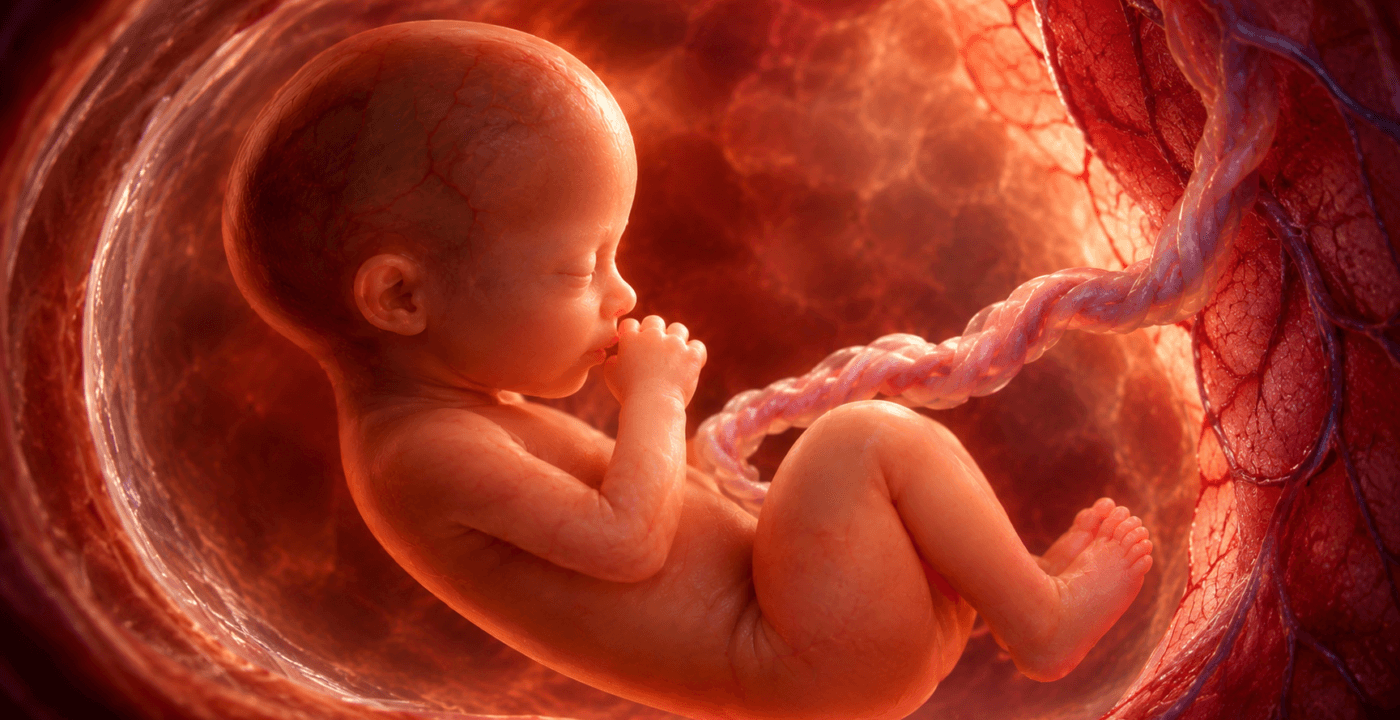
The unborn child cannot speak for himself or herself. That vulnerability imposes a moral responsibility on society to ensure that the interests of unborn children are not simply ignored.
Sexual responsibility and the Nigerian family
There is also a need for greater honesty in the national conversation about sexuality.
Young people require accurate information, responsible guidance and education that enables them to make informed decisions about sexual behaviour and its consequences. Families, schools, religious institutions, community organisations and government agencies all have responsibilities in this regard.
From my own religious perspective, character formation, self-discipline, responsible relationships and, where consistent with one’s faith, premarital abstinence should be part of this conversation.
At the same time, public-health policy must confront the realities faced by young people, including sexually transmitted infections, unintended pregnancies and sexual violence, through evidence-based education and appropriate healthcare.
The broader objective should be the preservation of human dignity, responsible citizenship, stable families and healthy communities.
Religious and community leaders also have an important role to play in promoting respect for human life and strengthening those African cultural values that regard life as sacred and worthy of protection.
Conclusion
The debate over abortion is unlikely to disappear. Indeed, developments in France, the United States and elsewhere demonstrate that the question will continue to occupy the attention of legislators, courts, churches, medical professionals, human-rights organisations and families.
But as societies debate reproductive autonomy and constitutional rights, another question must not be forgotten: what rights and protections should be afforded to the unborn child?
For those of us who believe that human life begins at conception, the answer is clear. The unborn child is not merely a potential human being; the unborn child is human life deserving dignity, protection and the opportunity to be born.
The challenge before Nigeria and the wider international community is therefore not simply to debate abortion but to build societies in which mothers are supported, children are protected, healthcare is accessible and human life is treated with dignity at every stage.
The protection of life must begin with those who are least able to speak for themselves.
EMMANUEL NNADOZIE ONWUBIKO is the founder of the Human Rights Writers Association of Nigeria (HURIWA) and a former National Commissioner of the National Human Rights Commission of Nigeria.