Johannesburg Looks to Rwanda for Inspiration after Trump Revokes Access to Duty-Free AGOA Market
South Africa is facing a radical restructuring of its export economy following an executive directive from Washington terminating the country’s duty-free access to American markets.
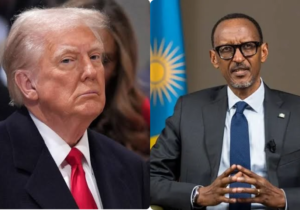
In a formal correspondence directed to President Cyril Ramaphosa, U.S. President Donald Trump issued a 60-day advance notice to revoke South Africa’s beneficiary status under the African Growth and Opportunity Act (AGOA), effective January 1, 2027.
The diplomatic rupture has prompted policymakers in Pretoria to evaluate the historical precedent of Rwanda, which successfully navigated a similar eviction by prioritizing domestic industrial sovereignty over preferential Western trade.
The Washington Ultimatum
The White House cited systemic compliance failures under Section 104 of the AGOA statute as the mechanism for termination. Washington’s grievances span persistent trade barriers and deeply entrenched geopolitical frictions.
According to the executive correspondence, South Africa failed to demonstrate continual progress in establishing mechanisms to combat corruption and bribery.
Furthermore, the Trump administration highlighted South Africa’s maintenance of significant tariff and non-tariff barriers affecting U.S. trade and investment, specifically citing agricultural market access, regulatory requirements, investment protections, and intellectual property.
Beyond commerce, the decree noted that certain actions by the Government of South Africa on matters of international security, alongside its cooperation with governments of concern to the United States, risk undermining U.S. national security and foreign policy.
While the White House left a narrow window for bilateral engagement, stating a hope that Ramaphosa’s administration will work closely to address the issues, the immediate economic outlook demands a rapid shift in trade strategy.
The U.S. ambassador to South Africa, L. Brent Bozell III, described the development as regrettable, blaming South African policies for the termination of AGOA for South Africa.
“This was a predictable and preventable outcome resulting from the rejection by South Africa’s government of real concerns raised by the U.S. government,” he wrote. He added, “I remain hopeful that we can find a path forward to address our larger bilateral concerns, but the South African government must understand the gravity of the situation.”
Doubling down on the issue, the Office of the United States Trade Representative, which led the annual interagency review of sub-Saharan African countries’ eligibility for the AGOA trade preference programme, disclosed that “the governments of Rwanda and South Africa are engaging in practices that are inconsistent with AGOA’s eligibility criteria.”
According to Ambassador Greer, “These concerning and pervasive practices include, but are not limited to, barriers that undermine American trade and investment and practices that pose a threat to U.S. national security and foreign policy interests in the region. The Trump Administration is working to ensure our African partners take the necessary steps to meet the eligibility criteria.”
The statement said the Trump Administration is deeply concerned about issues of trade and investment barriers, rule of law, political pluralism, internationally recognized worker rights, human rights, and threats to U.S. national security and foreign policy interests in Rwanda.
In South Africa, it said, “The Trump Administration is deeply concerned by barriers to U.S. trade and investment, corruption, and threats to U.S. national security and foreign policy interests.”
The Rwandan Precedent
As South Africa assesses the fallout, the historical trajectory of Rwanda offers a compelling case study in economic resilience. Struck from the AGOA roster in 2018 after refusing to allow the dumping of American secondhand clothing, Rwandan President Paul Kagame has long championed industrial self-reliance over trade concessions.
“AGOA, you know Rwanda was a beneficiary of AGOA. Not any longer, we were struck off the list of beneficiaries,” Kagame stated during a retrospective on the policy. “Simply because we wanted to promote and develop textile industries here to make our own garments… We told them no, and they said okay, we would strike you off AGOA, which they did. We’ve never been returned to it. But we never accepted secondhand clothes.”
Kagame’s strategy proved that an exit from AGOA, while disruptive, could serve as a catalyst for domestic manufacturing.
For South Africa, the strategy signals a potential pivot toward other markets, particularly the African market under the framework of the African Continental Free Trade Area (AfCFTA), strict import substitution, and accelerated industrialization.
Market Reality and Tariff Adjustments
Despite the severe diplomatic optics, agricultural and trade economists urge a measured assessment of the macroeconomic damage. South African trade analyst Wandile Sihlobo notes that the end of AGOA does not signal a total embargo on South African goods.
“South Africa’s graduation out of AGOA doesn’t mean we won’t have access to the U.S. market,” Sihlobo stated. “We will have access, but with slightly higher tariffs. While we are now in a different political climate, I think it’s important to remember that aside from the issues the U.S. raised about South Africa’s eligibility to be part of AGOA, there have been some conversations for some time.”
Sihlobo emphasized that conversations regarding South Africa “graduating” out of AGOA have been circulating since 2014, given the country’s highly developed industrial base relative to other sub-Saharan beneficiaries.
The immediate challenge for South African exporters—particularly in the automotive, wine, and citrus sectors—will not be a loss of market access but rather navigating tighter profit margins as standard U.S. customs duties apply.
The Continental Pivot: Can the AfCFTA Shield South Africa?
The primary vehicle for economic realignment is the AfCFTA, a grand integration project designed to create a single continental market.
While the macroeconomic blueprint could potentially insulate South Africa from Western trade volatility, the strategy forces Pretoria to balance immense demographic opportunities against structural gridlocks and severe self-inflicted diplomatic wounds.
By looking inward, South Africa is trading a wealthy but politically fickle American consumer base for the world’s fastest-growing demographic landscape.
The AfCFTA unites an economic bloc of 1.4 billion people, a market projected to swell to 2.5 billion by 2050. Unlike the rapidly aging populations of the West, the African continent boasts the world’s youngest demographic profile and an unprecedented rate of urbanization.
For South Africa’s industrial sectors, this represents a rapidly expanding consumer class with a high propensity for purchasing manufactured goods, retail services, and processed foods—sectors where South Africa holds a clear competitive edge.
Historically, South Africa’s trade with the global North has been heavily colonial in nature, with approximately 75 percent dominated by the extraction and export of raw minerals and semi-processed commodities.
The African market, on the other hand, offers a fundamentally different economic proposition. By replacing raw exports with value-added manufactured goods, domestic employment is given a significant boost.
Consequently, intra-African trade—which remains stubbornly low, accounting for roughly 15% to 18% of the continent’s total commerce—could rise exponentially.
South Africa’s existing trade with its continental peers consists primarily of value-added manufactured products—including automobiles, machinery, chemicals, and pharmaceuticals.
By leveraging the AfCFTA’s mandate to eliminate tariffs on 90% of goods, South Africa can transform itself into the undisputed industrial engine of the continent, boosting domestic factory output and creating a vital buffer against the margin compression expected when U.S. tariff exemptions expire.
The Diplomatic Liability: The Shadow of Xenophobia
While the prospects of pivoting are significant, the most volatile hurdle to South Africa’s continental ambitions is not economic but deeply political. Pretoria’s strained relations with other African nations due to recurring anti-immigrant attacks within its borders threaten to derail its trade diplomacy.
Severe bouts of xenophobic violence targeting African migrants in Johannesburg and Durban have repeatedly drawn fierce condemnation from continental heavyweights, including Nigeria, Ghana and the Democratic Republic of Congo, and with neighbours Zimbabwe.
In the past, grassroots anger over anti-immigrant sentiment has triggered retaliatory boycotts of South African corporate interests operating abroad and caused major diplomatic standoffs.
If South Africa aggressively pursues African market share under the AfCFTA while maintaining a hostile domestic environment for African nationals, it faces severe roadblocks. Wary continental partners may weaponize informal non-tariff barriers, customs delays, and regulatory friction to penalize South African goods in retaliation.
Ultimately, Johannesburg’s success in mirroring Rwanda’s economic self-reliance will depend on more than just industrial policy; it will require a profound reset of its regional diplomacy and a commitment to true continental integration.

Editor-in-Chief at Klick News