‘It Was Humiliating! ’: President Mahama Reveals Why Ghana Rejected ‘Insulting’ U.S. Health Compact
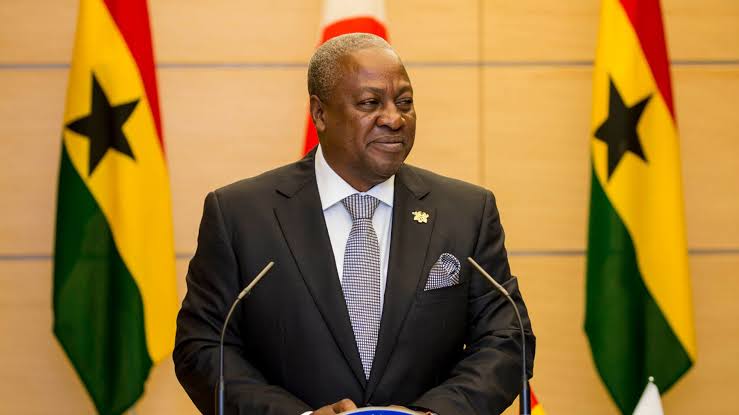
President John Mahama has sharply criticized a proposed United States health compact deal, describing it as a “humiliating” offer that infringed upon Ghana’s sovereignty and national security.
Speaking at a Council on Foreign Relations (CFR) event on the sidelines of the United Nations General Assembly (UNGA), President Mahama revealed that the proposal was unanimously thrown out by the Ghanaian cabinet in record time.
The health compact, which was intended to replace existing USAID funding, reportedly contained several controversial clauses that alarmed Ghanaian authorities during an internal review.
Unacceptable Clauses and Security Red Flags
According to President Mahama, the text of the compact required Ghana to hand over highly sensitive medical and biological data to the United States.
“We flagged several things in the compact,” Mahama stated. “One of them was that we shall give the United States our pathogen profile. That means that diseases that are endemic in Ghana.”
The President expressed disbelief at another clause demanding access to the private health data of Ghanaian citizens. “It also says that we should give our medical records. I mean, who takes another country’s medical records? So that was strange.”
In addition to data privacy violations, the agreement demanded that Ghana co-fund a portion of the programme while simultaneously stripping the nation of its regulatory oversight.
“It says any medication or medical products that shall be brought to our country, our (Ghana) Food and Drug Administration (FDA) has absolutely no right to inspect,” Mahama revealed.
’Thrown Out in Record Time’
The financial package attached to the agreement—valued at just over $100 million—was deemed entirely insufficient to justify giving up sovereign regulatory and health controls.
“I mean, it was humiliating, and so the compact was thrown out in record time in our cabinet. I’ve never seen anything thrown out as fast as that,” Mahama said.
Reaffirming Ghana’s status as a self-governing, democratic nation, President Mahama confirmed that the health minister was instructed to formally reject the deal to the U.S. Ambassador.
“Of course, we rejected it and asked the health minister to inform the U.S. Ambassador that we didn’t need them to manage ourselves—and for a pittance, a hundred and something million dollars. And so we said no, we didn’t want it, and we’re doing fine,” Mahama concluded.
The U.S. State Department and USAID have not yet publicly responded to the Ghanaian President’s remarks.
Background: From USAID to Health Compact
The proposed health compact rejected by Ghana is part of a broader, sweeping shift in United States foreign policy under the second Trump administration.
Following the administration’s dismantling and restructuring of traditional United States Agency for International Development (USAID) programs in 2025, Washington introduced its new “America First Global Health Strategy.” The policy seeks to drastically phase out direct, unconditional financial aid across the African continent, replacing long-standing grant frameworks with highly conditional bilateral health compacts.
Under this revamped model, the U.S. government aims to offload systemic healthcare costs onto host nations while demanding stringent reciprocal concessions—including unprecedented access to localized biological data and sovereign regulatory exemptions.
Ghana’s resistance mirrors a growing wave of pushback across Africa against these new terms.
In the wake of the U.S. funding withdrawals, nations like Zimbabwe and Zambia flatly rejected similar proposed health compacts over direct threats to their national security and data sovereignty.
While the administration has successfully signed alternative pacts with over two dozen other nations willing to meet the new criteria, the collapsing negotiations in Accra underscore a widening diplomatic rift.
For Ghana, the sudden suspension of legacy USAID funding left an estimated $74 million annual health-sector shortfall.
Rather than capitulate to the new administration’s terms, President Mahama has pivoted toward an aggressive domestic health sovereignty policy dubbed the “Accra Reset,” ordering the finance ministry to bridge the budget deficit locally while expanding domestic pharmaceutical and vaccine manufacturing capacities

Editor-in-Chief at Klick News