‘Disgrace for Germany’: Chancellor Merz Sounds Alarm Over Jewish Safety After Regional Election Rout
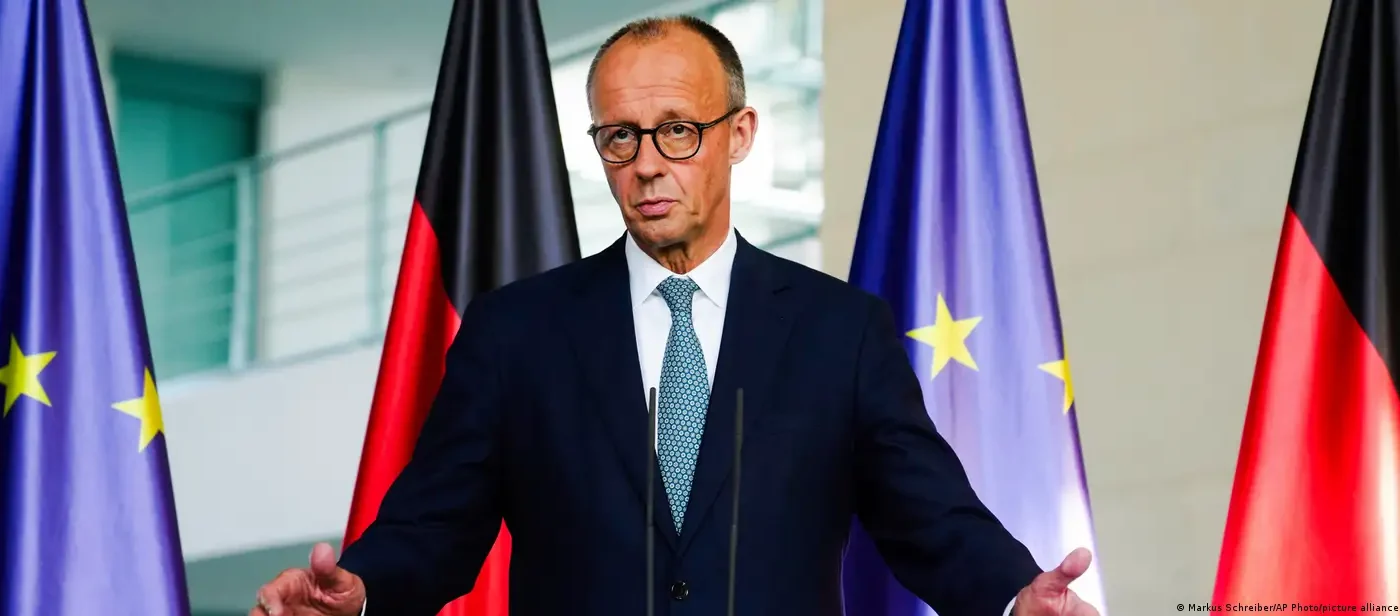
German Chancellor Friedrich Merz on Monday issued a stark warning that “Jewish life in Germany is no longer safe” as he faced reporters in Berlin to address a devastating wave of regional election defeats for his Christian Democratic Union (CDU) party.
The political shockwaves have forced Merz to confront existential questions about his leadership, though he firmly rejected calls to step down.
A ‘Disgrace for Germany’
Speaking from the capital, Merz focused heavily on the rising tide of antisemitism following the regional ballots, directly tying the safety of Jewish communities to Germany’s national standing.
“The CDU and I personally are committed to doing everything possible to ensure that Jewish life in Germany, and especially here in the capital, Berlin, is safe,” Merz stated. “Where there is a threat to that safety, we will oppose it with all the resources at our disposal.”
The Chancellor addressed his remarks not only to domestic audiences but also to the international community, referencing a sharp shift in public safety since late 2023.
“I am sending this message to all Jewish communities around the world, who are watching with deep concern what has become possible, especially since October 7, 2023, on the streets and squares, in the media, both publicly and privately here in Berlin,” Merz said. “This is a disgrace for Germany, and I will do everything I can to control and push it back.”
Historic Defeats and Existential Questions
The Chancellor’s urgent rhetoric comes amid a reshaping of the German political landscape. The CDU suffered a series of unprecedented electoral routs, which Merz openly dubbed a “disaster.”
In Mecklenburg-Western Pomerania, the right-wing nationalist Alternative for Germany (AfD) secured a dominant first-place finish with over 38 percent of the vote—marking their second major state victory in just two weeks.
In contrast, the CDU collapsed to a projected 4.9 percent on the preliminary count. Falling just short of the crucial 5 per cent electoral threshold, the CDU faces exclusion from the Mecklenburg state parliament for the first time in post-WW2 history.
Meanwhile, in the Berlin state election, the left-wing Die Linke captured the top spot with 25.7 per cent of the vote, beating out the CDU’s 18.8 per cent. The result positions Die Linke’s lead candidate, Elif Eralp, to potentially become the capital’s next mayor.
Eralp, the daughter of Turkish refugees who identifies as Muslim, ran on a staunchly pro-Palestinian rights platform.
“The CDU party now faces fundamental and very long-term questions,” Merz admitted. “We therefore agreed in the praesidium to discuss this thoroughly, to deliberate intensively on where we currently stand, where we want to go, and where we cannot remain in our present form.”
Merz Vows to Fight On
Despite rumors that party factions could attempt to oust him, Merz made it clear he intends to govern. He confirmed that the Social Democrats (SPD) signaled their desire to maintain the current governing coalition in Berlin, a path he fully supports.
“Frankly, we have not provided satisfactory answers to too many questions… and that is something we will and must change,” Merz noted, while reaffirming that both his party and Germany must remain “firmly anchored in the European Union.”
The surge of both AfD and Die Linke signals a deeper shift in German foreign policy sentiment.
While polarized on domestic issues, both populist parties heavily campaigned on halting further military aid to Ukraine and reopening diplomatic dialogue with Russia, presenting a direct challenge to the federal government’s established geopolitical stance.
(VIORY)