Jose Maria Neves Re-elected as Cape Verde President with 63.8% of the Vote
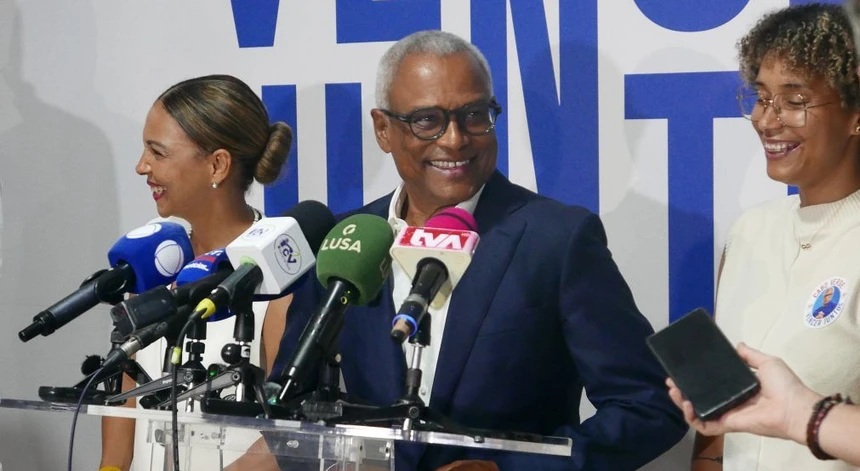
Cape Verde’s President Jose Maria Neves won a landslide second five-year term on Sunday, securing 63.8 percent of the vote to defeat five challengers in an election marked by historic low voter turnout.
According to provisional results, the 66-year-old incumbent more than doubled the tally of his closest rival, former Justice Minister Joana Rosa. Rosa, the first woman to run for president in the Atlantic archipelago’s history, received 31.6 percent of the vote. She swiftly conceded defeat and congratulated Neves, eliminating the need for a second-round runoff.
“First of all, I come to greet all Cape Verdean women and all Cape Verdean men for these democratic days,” Neves told supporters in the capital, Praia. “It was indeed a great victory. We won close to 64 percent, which is, by all accounts, an excellent victory.”
Despite the decisive margin, electoral data revealed widespread voter apathy. Roughly 68 percent of registered voters abstained from casting a ballot, a sharp increase from the 52 percent abstention rate recorded during the 2021 presidential race.
The campaign focused heavily on domestic economic pressures, including high unemployment, soaring living costs, and a steady exodus of young Cape Verdeans seeking opportunities abroad.
Addressing these concerns in his victory remarks, Neves pledged to prioritize economic stability alongside democratic governance.
“You can count on me to continue promoting freedoms, democracy, the rule of law, and inspiring the Cape Verdean nation towards inclusive and environmentally sustainable growth,” he said.
Neves, who previously served as prime minister for 15 years before assuming the presidency in 2021, was backed by the centre-left African Party for the Independence of Cape Verde (PAICV). His re-election consolidates power for the PAICV, which also captured a parliamentary majority in May.
Located off the coast of Senegal with a population of roughly 500,000, Cape Verde is widely recognized as one of Africa’s most stable democracies. Under its semi-presidential system, the prime minister oversees day-to-day governance, while the president acts as head of state and holds executive authority, including the power to veto legislation.
(VIORY)