Historic Midterms: Florida and Georgia Elect First Black Governors in Realignment Election
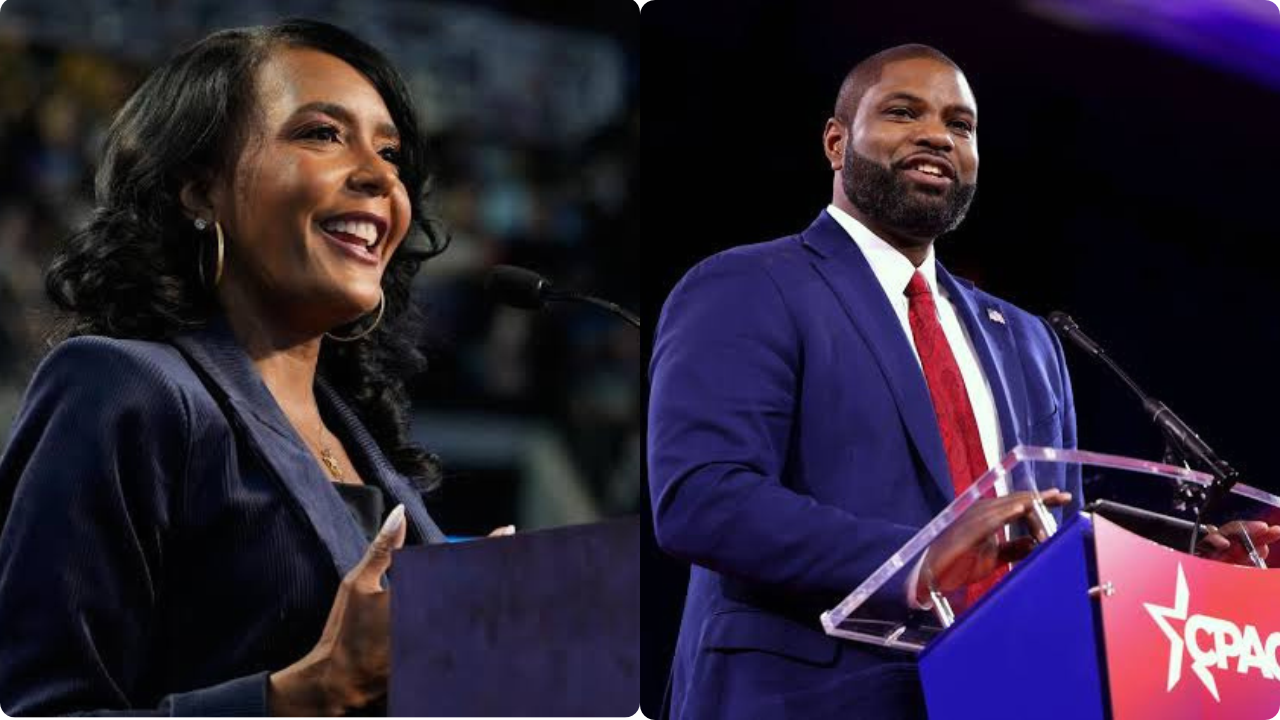
Voters in Florida and Georgia have elected their states’ first Black governors, shattering executive barriers on both sides of the political aisle.
In Florida, Republican U.S. Representative Byron Donalds narrowly secured the governorship with 50.1% of the vote, defeating Democrat David Jolly in a highly competitive race. The victory makes Donalds the first Black governor in Florida’s history and the first Black Republican ever elected to a gubernatorial seat in the United States.
Succeeding the term-limited Governor Ron DeSantis, Donalds’ takes the helm of a state that has seen three decades of continuous Republican executive control.
Meanwhile, a parallel breakthrough unfolded on the Democratic side in Georgia, where former Atlanta Mayor Keisha Lance Bottoms defeated billionaire Republican businessman Rick Jackson. With her victory, Bottoms becomes the first Black woman ever elected governor in U.S. history, as well as the first female governor of Georgia, ending 24 years of Republican rule in the state’s highest office.
National Realignments and Political Legacies
The simultaneous victories represent a shift in the American political landscape. Prior to now, only three Black individuals—all Democratic men—had ever been elected governor in the United States.
In his South Florida victory speech, Donalds’ heavily credited Donald Trump’s early and vital campaign backing, explicitly thanking the president for his support.
However, the narrow margin of Donalds’ victory—won by less than two percentage points compared to DeSantis’s 20-point landslide in 2022—reflected deep voter anxiety over local issues. Front and centre for Florida voters was an ongoing affordability crisis, driven by skyrocketing property taxes and a severe homeowners insurance market collapse.
Donalds sought to counter these headwinds by actively campaigning in non-traditional Republican spaces, pushing a platform centred on school choice and economic meritocracy to appeal to minority communities.
Across the state line in Georgia, Bottoms’ historic win marked the culmination of a decade-long voting rights and mobilization effort championed by figures like Stacey Abrams, whose previous campaigns built the infrastructure necessary to flip the deep South executive seat.
For Bottoms, the victory carried immense personal weight; her ancestry in Georgia stretches back five generations to relatives enslaved on a Crawfordville plantation. On the eve of the election, Bottoms visited their gravesites, framing her victory as the ultimate trajectory of a changing South.
Both governors-elect face immediate pressure to deliver on contrasting mandates, but their dual ascendance guarantees that the landscape of American political representation has been fundamentally altered.