ANALYSIS—THE INSOLVENCY CONUNDRUM: Balancing Statutory Overlap and Judicial Evolution in Nigeria’s Commercial Sector
For decades, Nigeria’s corporate insolvency framework was widely critiqued by investors and practitioners alike as fragmented, overly punitive, and quick to trigger liquidation. While the enactment of the Companies and Allied Matters Act (CAMA) 2020 promised a modern shift toward corporate rescue and administration, practical execution has frequently collided with deep-seated litigious habits and legislative overlaps.
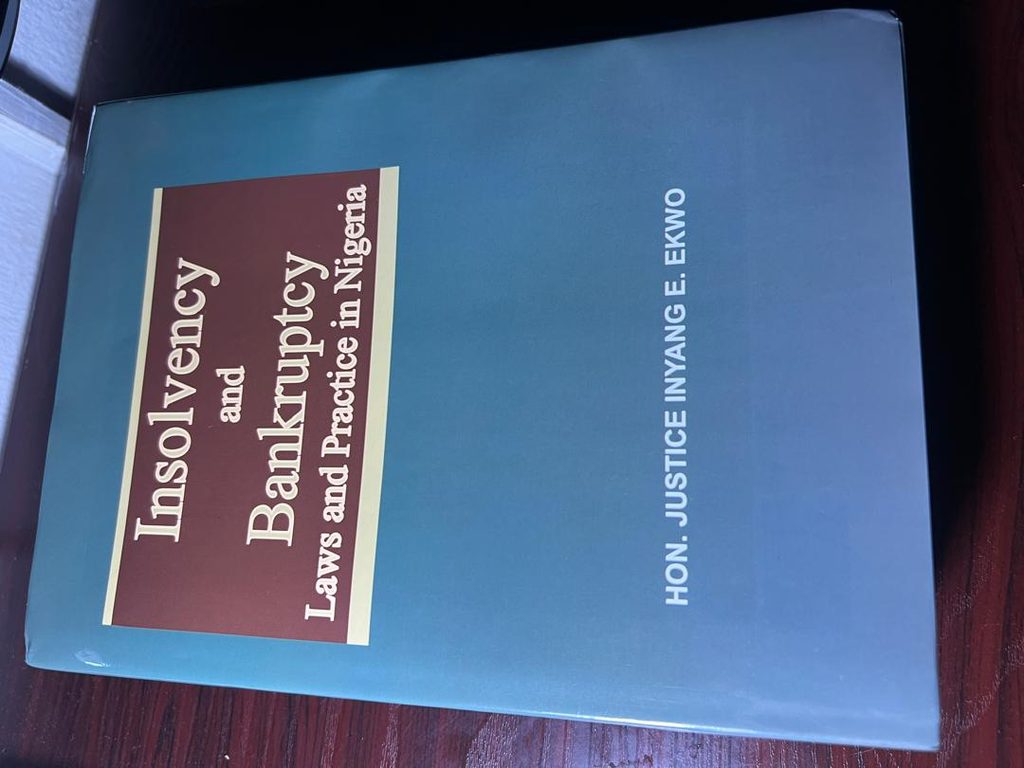
A dual intervention—one literary, the other judicial—has shed much-needed light on these structural fault lines. The publication of Insolvency and Bankruptcy: Laws and Practice in Nigeria, a comprehensive 988-page treatise authored by Federal High Court Judge, Justice Inyang Ekwo, offers a timely critique of the country’s statutory congestion.
Concurrently, a landmark ruling by the Supreme Court of Nigeria has rewritten the rules on receivership, resolving a critical tension between corporate self-preservation and creditor aggression.
Together, these developments signal a pivotal moment for Nigerian commercial law: an era where the judiciary is actively pruning legal ambiguities to protect corporate entities from premature death.
The Regulatory Thicket: Too Many Laws, Too Little Focus
A central thesis in Justice Ekwo’s 21-chapter analysis is that Nigeria suffers from an embarrassment of riches when it comes to regulatory instruments. Despite the revolutionary provisions introduced by CAMA 2020—including company voluntary arrangements and formal administration tools—the landscape remains heavily cluttered.
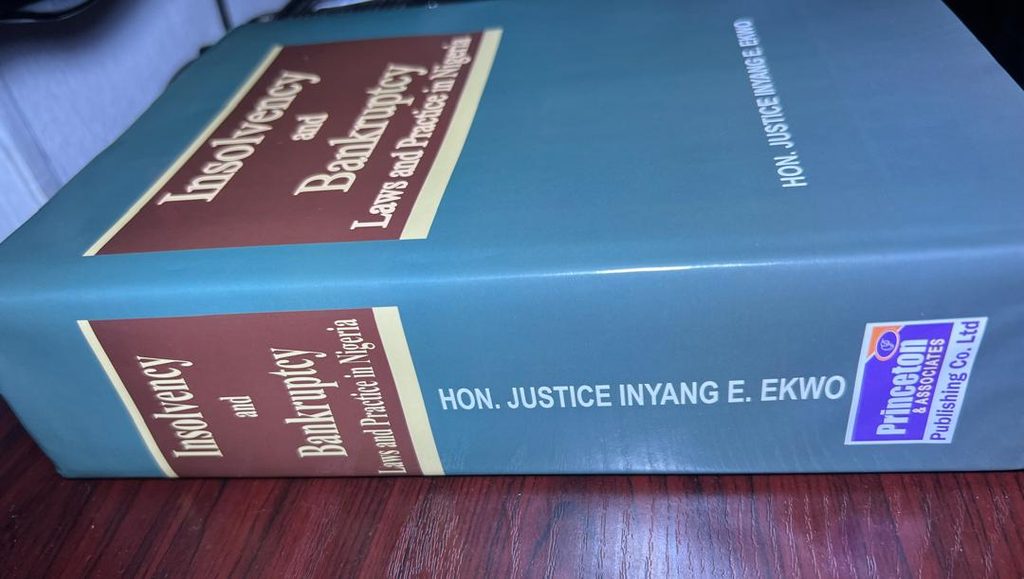
Justice Ekwo, drawing from his in-depth experience and unique career trajectory spanning decades at the Corporate Affairs Commission (CAC) before joining the bench, argues that Nigeria’s legislations on insolvency are unnecessarily bloated. His primary policy recommendation is clear: Nigeria must aggressively reduce the sheer number of standalone laws governing the subject and enact a single, dedicated, unified Insolvency Act.
Unlike peer Commonwealth jurisdictions that utilize streamlined, specialized insolvency codes, Nigerian practitioners must navigate a fragmented web of rules. This statutory inflation has bred a counterproductive corporate culture. Rather than viewing insolvency through the lens of restructuring or corporate rescue, creditors routinely rush to secure court orders to wind up struggling companies or appoint liquidators at the slightest hint of financial distress. This “liquidation-first” reflex defeats the economic purpose of modern corporate rescue laws.
Receivers vs. Directors: The Battle for Corporate Identity
The friction within Nigeria’s insolvency regime is most visible in the execution of receiverships. Under Section 868 of CAMA 2020, a distinct legal line exists between a receiver simpliciter (whose narrow mandate is to seize, preserve, and realize specific assets to satisfy a debt) and a receiver-manager (who assumes operational control to run the company as a going concern).
However, a recurring constitutional and commercial battleground emerges when the legal owners or directors of a company challenge the very validity of the receiver’s appointment. Who speaks for the company when its management is being contested?
For years, a controversial interpretation held sway, suggesting that once a receiver-manager was in place, the company’s directors were entirely stripped of the power to appoint legal counsel—even to defend the company in a suit challenging that specific receiver. This dynamic effectively allowed a disputed receiver to appoint lawyers to defend their own appointment using the company’s name and resources.
The Supreme Court Restores Balance: Neconde Energy v. FBNQuest
This precise conflict culminated in the recent landmark Supreme Court case, NECONDE ENERGY LTD v. FBNQUEST LTD & ORS (SC/CV/48/2026). The apex court was tasked with reviewing a controversial Court of Appeal decision that had disqualified two prominent Senior Advocates of Nigeria (SANs)—Wole Olanipekun and Dr. Muiz Banire—from appearing as counsel for Neconde Energy Limited and Nestoil Limited. The lower court had reasoned that the power to appoint counsel rested exclusively with the appointed receiver-manager, even while the legality of that appointment was being litigated.
In a unanimous judgment delivered by Justice Mohammed Idris, the Supreme Court fundamentally rejected this stance, bringing the practical application of the law into alignment with the academic warnings raised in Justice Ekwo’s book.
The Apex Court established several crucial precedents:
- Legal Personality Survives: The appointment of a receiver does not extinguish a company’s distinct legal personality or its constitutional right to self-defense.
- Conflict of Interest: Where the legality of a receiver’s appointment is actively in dispute, it creates an unresolvable conflict of interest for that same receiver to select the counsel tasked with defending or conceding the company’s position.
- Residual Powers Maintained: Because Section 556(3) of CAMA 2020 does not explicitly strip a company of its fundamental right to litigate its existence, the company retains its residual powers to defend itself through its directors and chosen counsel.
The Road Ahead for Commercial Practice
The Supreme Court’s ruling acts as a vital check on creditor overreach and provides a more equitable framework for corporate dispute resolution. By affirming that corporate insolvency laws are fluid and subject to evolving judicial interpretations, the apex court has closed a dangerous loophole that allowed receivers to act as judges in their own causes.
For commercial law practitioners, corporate accountants, regulators, and business owners, the current environment demands a deeper engagement with the dual realities of statutory text and courtroom pragmatism.
As Justice Ekwo notes, the pronouncements of the courts are heavily shaping how commercial law is implemented in real-time.
If Nigeria is to truly build a resilient corporate ecosystem, the legislature must heed the growing consensus from both the bench and academia: consolidate the bloated legislative framework, curb the rush to liquidate, and protect the residual rights of businesses fighting to survive.
Justice Ekwo’s latest scholarly intervention, brings the entire scope of the issues in Nigeria’s insolvency and bankruptcy laws and practice into a single legal and judicial analytical context, providing just the right framework for legislators, corporate practitioners, policy makers, administrators, lawyers, judges, academics, law students to feast on.

Editor-in-Chief at Klick News