Reps Members Raise Alarm Over Tinubu’s Absence, Demands NASS Declare Shettima Acting President
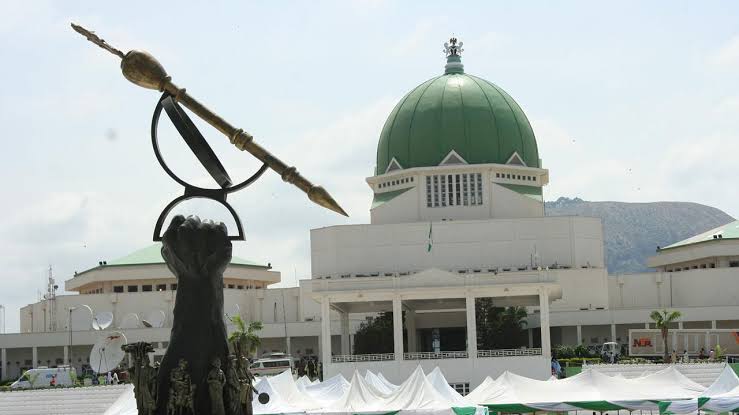
Members of Nigeria’s House of Representatives, together with the civil society organization—Save Democracy Group, have raised serious concerns over the prolonged absence of President Bola Ahmed Tinubu, demanding that the National Assembly clarify who is constitutionally in charge of the country.
In a strongly worded press statement released on September 23, 2026, the advocacy group pointed out that the 21-day timeline stipulated by the constitution for presidential vacations has expired, plunging the nation into a state of “constitutional uncertainty.”
President Tinubu departed Nigeria on August 30, 2026, for what the Presidency initially described as a three-week vacation. While officials later confirmed that his stay abroad would be extended by a few days, the Save Democracy Group argues that the extension has triggered serious legal obligations that cannot be ignored.
The 21-Day Constitutional Dilemma
At the heart of the dispute is Section 145 of the 1999 Constitution of the Federal Republic of Nigeria (as amended). Under Section 145(1), a president proceeding on vacation must transmit a written declaration to the President of the Senate and the Speaker of the House of Representatives, formally handing power to the Vice-President as Acting President.
However, the group highlighted that Section 145(2) provides a safety net if a president fails to do so. If the written declaration is not transmitted within 21 days, the National Assembly is constitutionally mandated to pass a simple-majority resolution in both chambers, empowering Vice-President Kashim Shettima to step in as Acting President.
“The constitutional question is therefore straightforward: Was the declaration required by Section 145 transmitted to the leadership of the National Assembly?” the statement read. “If it was not transmitted, the 21-day constitutional period has elapsed and the National Assembly has a responsibility to act.”
Technology vs. the Constitution
The group rejected arguments that modern technology allows a head of state to govern effectively from anywhere in the world. They insisted that governance by proxy or remote assurances cannot bypass explicit legal requirements.
“The Constitution cannot be replaced by assurances that the President remains in communication with officials or continues to issue directives from abroad,” the group stated. “The question is not whether modern technology allows the President to work from another country. The question is whether the Constitution has been obeyed.”
To illustrate its point, the group drew comparisons with other African democracies. They cited Botswana, noting that when President Duma Boko travels, authority is seamlessly and transparently transferred to the Vice-President or a designated minister to ensure clear, formal continuity.
Demands for Immediate Legislative Action
With the 21-day window closed, the Save Democracy Group is calling on Senate President Godswill Akpabio and Speaker of the House of Representatives Tajudeen Abbas to immediately reconvene both chambers of the National Assembly.
The group demanded that the National Assembly leadership must formally disclose whether President Tinubu transmitted the required Section 145(1) declaration before or during his absence. It also wants an emergency session of both chambers to immediately reconvene to address the constitutional vacuum.
More significantly, the group wants the invocation of Section 145(2) that if no formal declaration was submitted within the 21-day window, lawmakers must swiftly pass a resolution mandating Vice-President Kashim Shettima to assume the role of Acting President until Tinubu formally signals his return.
Clamping down on legislative hesitation, the group concluded, “The National Assembly cannot insist that citizens obey the Constitution while treating its own express constitutional responsibilities as optional. No individual is greater than the Constitution. No political convenience can override an express constitutional obligation.”
The Presidency and the leadership of the National Assembly have yet to issue an official response to the group’s demands.