Nigeria’s Inflation Falls to 14.06% in October as Food Prices Ease
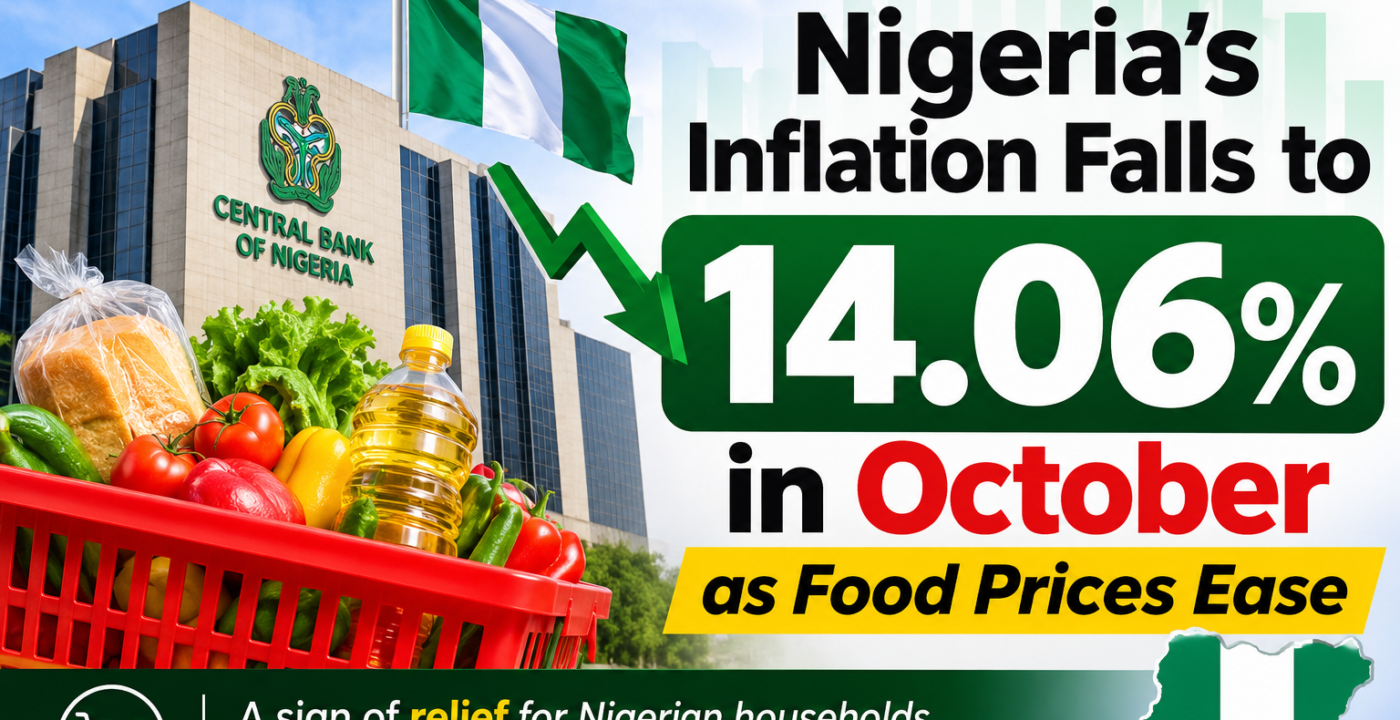
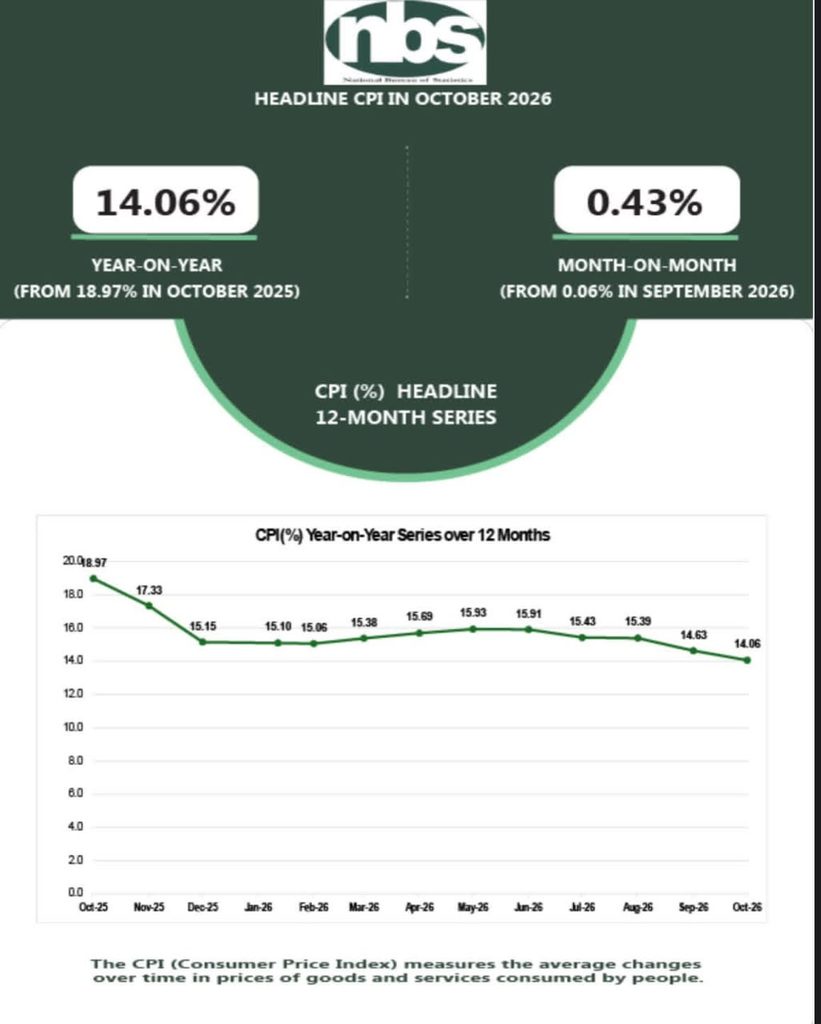
Nigeria’s headline inflation rate declined to 14.06 per cent in October 2026, down from 14.63 per cent recorded in September, extending the country’s ongoing disinflation trend.
According to the latest Consumer Price Index (CPI) report released by the National Bureau of Statistics (NBS), the moderation was largely driven by a sustained drop in food inflation and a significant easing in underlying price pressures.
However, the data also revealed a faster pace of price increases on a month-on-month basis, raising fresh questions about the short-term sustainability of the downward trajectory and its immediate relief on household purchasing power.
Food and Core Inflation Moderate
The average annual food inflation rate for the twelve months ending October 2026 stood at 15.98 per cent, representing a sharp drop from the 26.47 per cent recorded in October 2025.
Beyond food items, underlying inflationary pressures softened considerably during the period under review. Core inflation—which strips out volatile agricultural produce and energy costs—fell to 10.78 per cent year-on-year in October 2026, down from 21.25 per cent in the corresponding period of 2025.
On a month-on-month basis, core inflation entered negative territory at -0.53 per cent, compared to 1.11 per cent in September, indicating an actual decline in the average prices of non-volatile goods and services during the month. The twelve-month average core inflation rate also moderated to 15.67 per cent from 25.07 per cent in October 2025.
Monthly Uptick Signals Lingering Pressures
Despite the broad-based annual deceleration, the month-on-month headline figures highlighted lingering cost-of-living pressures.
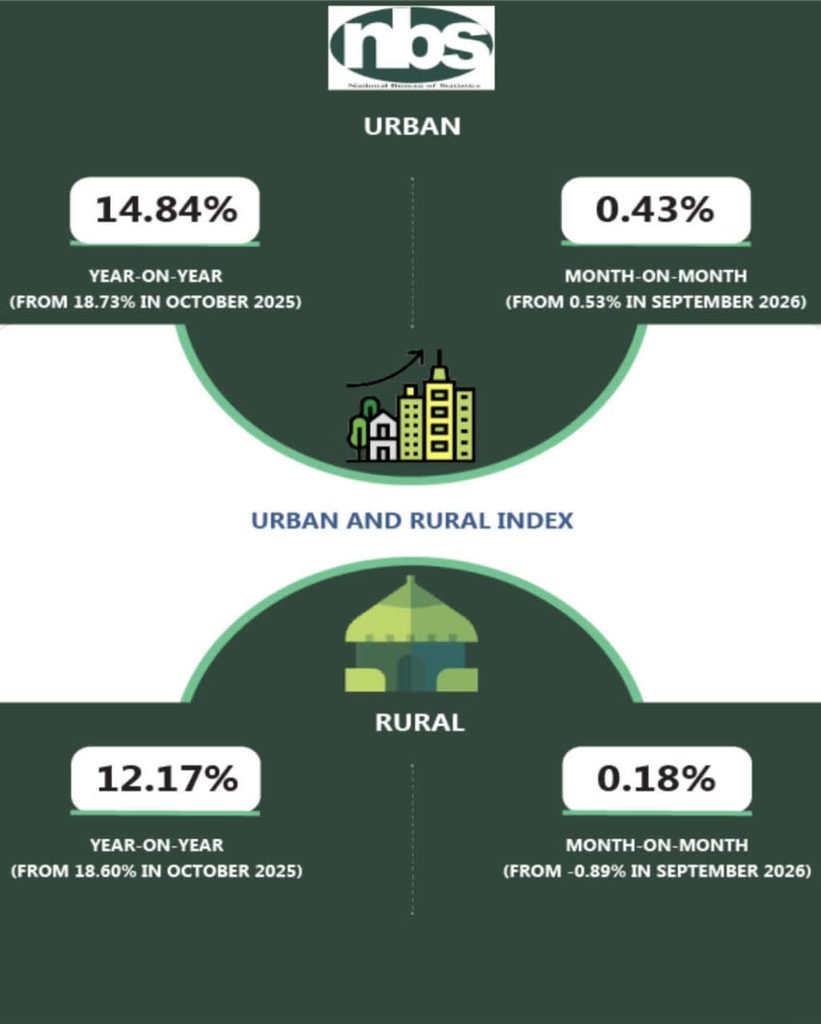
The NBS reported that month-on-month headline inflation rose to 0.43 per cent in October, up from 0.06 per cent in September. The 0.37 percentage-point uptick shows that the general price level accelerated at a faster pace in October than in the preceding month.
Essential household categories accounted for the bulk of the increase. Food and non-alcoholic beverages made the largest contribution to the monthly inflation rate at 0.17 per cent, followed by restaurants and accommodation services at 0.06 per cent. Transport accounted for 0.05 per cent, while housing, water, electricity, gas, and other fuels contributed 0.04 per cent.
While the year-on-year figures confirm a steady cooling of overall inflation, persistent price movements across critical daily expenditure categories remain a key factor for Nigeria’s near-term economic outlook.

A business journalist focused on uncovering the stories shaping companies, markets, industries, and the wider economy. Skilled at turning complex financial and corporate developments into clear, engaging stories that inform and connect with readers. Committed to accurate, insightful reporting that goes beyond the headlines.