Nigeria at 66: Peter Obi Laments Worsening Poverty, Out-of-School Children Crisis under APC
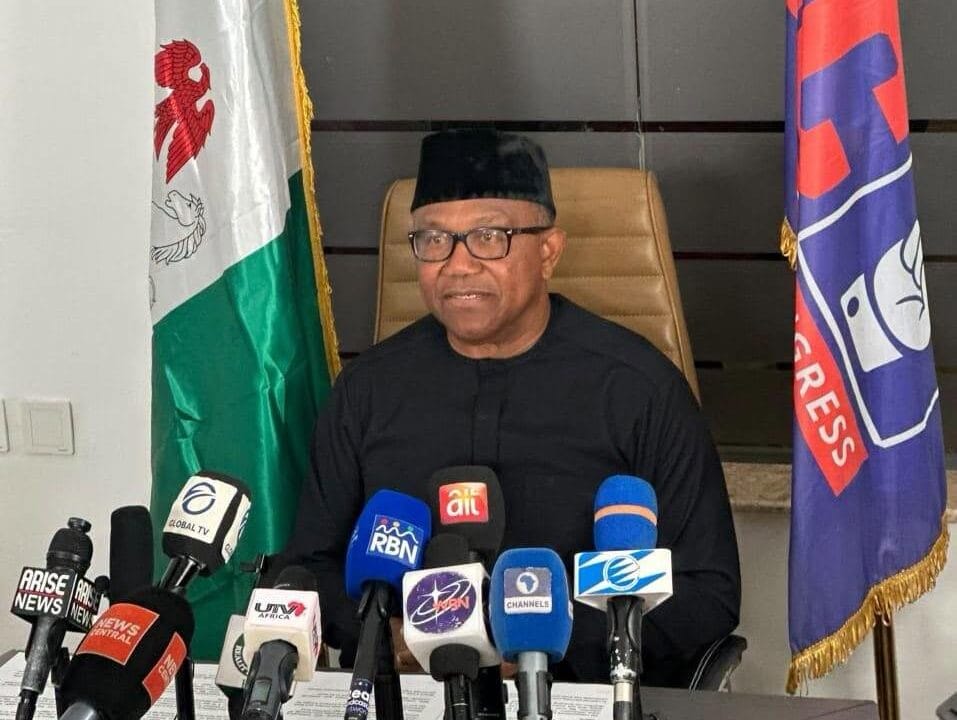
Presidential candidate of the Nigeria Democratic Party (NDC) Peter Obi has marked Nigeria’s 66th Independence Anniversary with a sobering assessment of the nation’s current trajectory, warning that the country faces a deepening crisis across all critical socio-economic sectors.
In a national address, the opposition leader highlighted alarming statistics on poverty, education, and security while directly criticizing the ruling All Progressives Congress (APC) for failing to deliver on its 2023 campaign promises.
Obi presented a breakdown of the structural challenges currently confronting the population. He said over 140 million Nigerians are currently living in severe economic hardship, with more than 40 million citizens projected to face extreme hunger by the end of 2026.
One education: he lamented that the out-of-school children population has surged past 18 million, and on health, he raised alarm over Nigeria’s infant and maternal mortality rates.
The NDC candidate also drew attention to youth employment numbers, saying over 35 million young Nigerians remain unemployed or underemployed, while substance abuse among youth has risen to 14%, compared to a 6% global average.
Sokoto Consultations and the IDP Crisis
The statement followed a joint two-day fact-finding mission to Sokoto State by Peter Obi and Senator Rabiu Kwankwaso. During the trip, both leaders held extensive consultations on the security and economic collapses affecting the northwest region.
Obi described conditions at the Ramin Kura Internally Displaced Persons (IDP) camp in the Sokoto metropolis as “deeply troubling,” citing thousands of women and children living without access to basic healthcare, education, or stable nutrition.
“What we saw in Ramin Kura is not an isolated story,” Obi stated. “It is a reflection of the suffering experienced, in different forms, across many parts of Nigeria. While ordinary Nigerians struggle with these realities, this present government often behaves as though these problems belong to another country.”
Rejecting a narrative of despair, Obi outlined an alternative governance framework centered on strict accountability and measurable productivity. He pledged that under his leadership, the federal government would decisively halt the insecurity that prevents farmers from cultivating land and keeps children out of classrooms.
In a direct challenge to the political elite’s luxury travel habits, Obi committed to domestic accountability, stating that he would not spend national holidays abroad. Instead, he pledged to spend his presidential recess periods visiting states across the federation—including Zamfara, Borno, Kwara, Ebonyi, Edo, and Ekiti—to directly engage with local challenges.
“The Nigeria we desire will not be built by prayers alone, nor by promises alone,” Obi concluded. “It will be built by leadership that understands that public office is a sacred trust, by citizens who demand accountability, and by all of us who refuse to accept failure as our destiny.”

Editor-in-Chief at Klick News