2027 Elections: INEC Uncovers Insider Fraud, Vows to Prosecute 54 Staff

ABUJA, NIGERIA — The Independent National Electoral Commission (INEC) has vowed to prosecute staff responsible for compromising the 2027 voters register with fake registrations.
The commission has also confirmed that 1,609,553 invalid registrations and verified deceased persons’ records have been struck out from the National Register of Voters following a comprehensive automated and public review ahead of the 2027 General Elections.
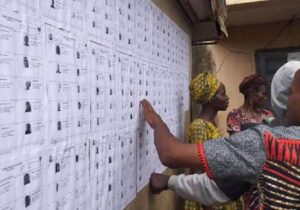
INEC Chairman, Professor Joash Ojo Amupitan, SAN, disclosed this while addressing widespread public complaints, claims, and objections that trailed the recent display of the preliminary voters’ register.
Unprecedented Clean-Up Ahead of Dec. 15 Deadline
The commission harvested a total of 11,088,238 records from the three phases of the 2025/2026 Continuous Voter Registration (CVR) exercise. The Automated Biometric Identification System (ABIS) initially flagged 1,545,052 records for verification.
Prior to the public display, INEC invalidated 1,277,052 entries. Following a 14-day statutory window for public complaints between October 9 and October 15, 2026, an additional 331,608 invalid registrations and 873 records of deceased individuals were scrubbed from the system.
“The commission confirms that the current register-cleaning exercise for the 2025/2026 Continuous Voters Registration has been concluded,” Amupitan stated. With this, the complaints and irregularities raised by the public on the preliminary register have been addressed.”
The final reconciliation and quality assurance checks are underway to ensure the approved updates are reflected in the Final Register of Voters, which is scheduled for official publication on December 15, 2026.
Insider Sabotage Exposed
The technical assessment exposed deliberate inflation and procedural violations by electoral officials. Investigators uncovered instances where registration personnel intentionally bypassed established safeguards, including misusing fast-track provisions designated for Persons with Disabilities (PWDs).
The electoral umpire has vowed severe administrative and legal consequences for those involved, which includes 54 personnel across 10 states having been explicitly identified as complicit.
It says disciplinary actions and administrative queries have commenced while prosecution is being initiated against the compromised staff to prevent future recurrence.
To secure the system against future manipulation, INEC is actively reinforcing its technical infrastructure with advanced biometric capture, stricter authentication protocols, and enhanced verification safeguards.
Legacy Duplications to be Tackled Next
Addressing the viral social media reports showing ridiculous names, duplicate images, and manipulated photographs, the INEC Chairman clarified that the vast majority of those irregularities stem from legacy data captured between 2011 and 2023 using older technology.
INEC had previously scheduled a nationwide voter revalidation exercise for February 2026 to overhaul these older records. However, following intense pushback from political stakeholders concerning its proximity to the 2027 General Elections, the commission deferred the revalidation exercise until after the upcoming polls.
To ensure these historical errors do not compromise the upcoming elections, the commission held an emergency meeting on Monday, November 9, 2026. The leadership directed that all previously flagged or obviously duplicated historical records from the 2011–2023 era be manually verified and removed prior to the December deadline.
False Omissions and PVC Distribution Timelines
Responding to complaints from citizens alleging that their names were omitted from the new preliminary register, Amupitan explained that the issue affected voters who registered between 2011 and 2023. Instead of legally transferring their polling units to their new residential locations, the individuals attempted to re-register completely, which got flagged by the automated ABIS system as double registrations.
Regarding Permanent Voter Cards (PVCs), the commission announced that the distribution of cards from Phases 1 and 2, alongside approved transfer cards, is actively ongoing across all Local Government Areas (LGAs).
Cards for the third and final phase of registrants are currently being delivered from overseas manufacturers and will be dispatched to states by next week. Beginning December 1, 2026, PVC distribution will decentralized from LGA offices back to local registration areas nationwide.
Multilayered Election Day Safeguards
Amupitan reassured the public that independent structural safeguards are in place to ensure a transparent voting process that protects legitimate voters from being disenfranchised.
“The Commission remains committed both to removing confirmed invalid entries and to protecting eligible Nigerians from wrongful exclusion,” Amupitan emphasized.
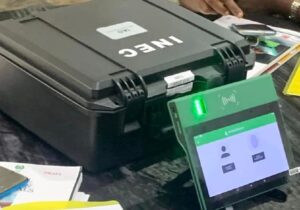
On Election Day, multiple voting will be mathematically and operationally blocked by the strict implementation of the Bimodal Voter Accreditation System (BVAS). Under the commission’s standard operating procedures, every voter must physically appear at their designated polling unit and successfully clear biometric authentication—via either fingerprint or facial recognition—before a ballot can be issued. The system prevents a single user from being accredited more than once.

A politics and current affairs reporter covering breaking political news, government affairs, elections, policy, and stories that matter.